Tuesday, August 30, 2022

Help Make Muni Safe for Everyone

Help Make Muni Safe for Everyone
By Mariana Maguire

Person figure with hands on its body in the center of a white circle with a red background and red slash-through symbolizing no harassmentNew Muni “no harassment” symbol

The safety of our customers and staff is a top priority for the SFMTA. That is why we are launching MuniSafe – a campaign to increase reporting of gender-based harassment through recently expanded incident reporting options.

If you experience or witness an incident, help us make MuniSafe by reporting it using the Muni Feedback form at SFMTA.com/MuniFeedback, the 311 mobile app or by calling 311.

Non-English speakers should call 311 for language-assisted reporting.

Gender-based harassment takes many forms, affects many people and is absolutely not tolerated on Muni. Survivors should report incidents to the San Francisco Police Department if they feel comfortable doing so. By also reporting incidents directly to the SFMTA, you will help us track events that occur in our system so we can build better safety responses and direct resources to reduce gender-based harassment.
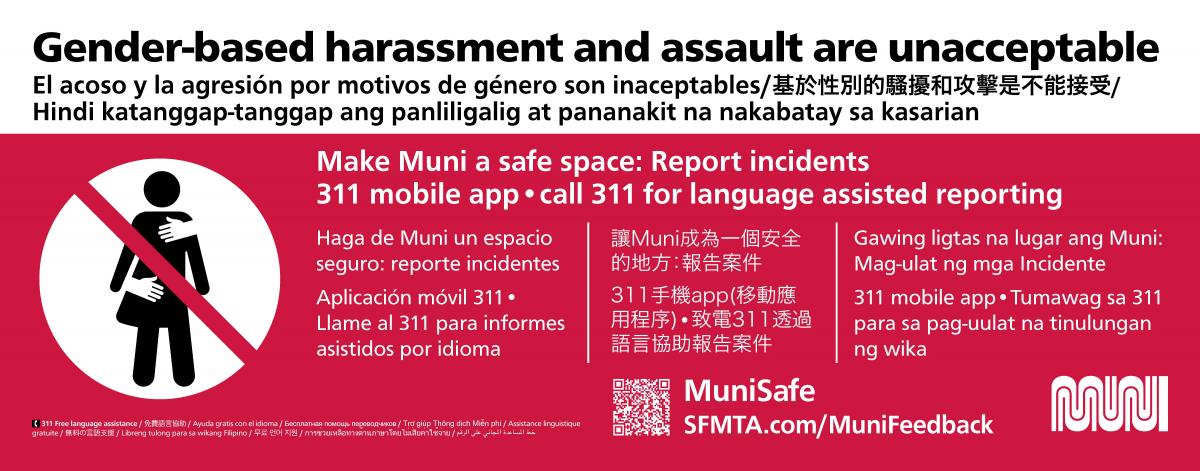
: Person figure with hands on its body in the center of a white circle with a red background and red slash-through symbolizing no harassment on the left quarter of an elongated red rectangle with text in three languages in the right three quarters and black text across the top with white background.New car cards that will be installed soon in vehicles system-wide with information about gender-based harassment reporting.

Use the Muni Feedback Form at SFMTA.com/MuniFeedback
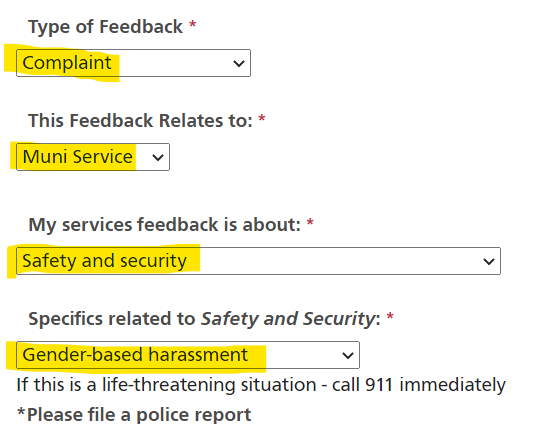
Screenshot of the Muni Feedback Form where "Complaint," "Muni Service," "Safety and Security," and "Gender based harassment" are selected

People should use the Muni Feedback form to report incidents at SFMTA.com/MuniFeedback. Under “Type of Feedback,” select “Complaint,” related to “Muni Service” to access the “Safety and security” topic and the specific topic of “Gender-based harassment.” You have the option to remain anonymous, or to request a follow up.

Your reports made on the form or by contacting 311 go directly to the SFMTA’s Security and Investigations Division. Information is confidential, but descriptions of incidents and behaviors may be shared with the San Francisco Police Department as necessary to support investigation and improve Muni safety.

Our staff will use the information provided in the report to internally investigate the incident, support the survivor and cooperate with law enforcement as needed. Staff will also analyze data from reports to identify and track trends and develop better safety approaches.

Personal Safety and Bystander Tips

  • Always stay alert and aware of your surroundings.
  • When traveling late at night or alone, sit close to the operator.
  • If someone is making you feel uncomfortable, move to a different part of the vehicle.
  • Ask for bystander assistance or call the operator for assistance when necessary.
  • If you see someone in a vulnerable situation or witness a possible incident, ask the individual if they are ok or need assistance. Offer to stay nearby.

The MuniSafe campaign is a multi-functional effort led by SFMTA’s Security Division to improve safety systems, processes and outcomes. SFMTA’s Safety Equity Initiative, announced in April 2022, is an integral part of the MuniSafe campaign. Learn more at SFMTA.com/SafetyEquity. If you have questions about this initiative, please email MuniSafe@SFMTA.com.


Published August 30, 2022 at 11:06PM
https://ift.tt/vhIf1Yk

Monday, August 29, 2022

Muni Color Schemes Through the Years

Muni Color Schemes Through the Years
By Jeremy Menzies

Over the 110-year history of the SF Municipal Railway, our transit vehicles have been painted in six main color schemes (known as “liveries”). Here’s a short look at those paint jobs, from the oldest streetcars to our newest buses. 

The timelines of these liveries overlapped and old colors were not always phased out even after a new color was introduced. Not included here are the many colors of cable cars, historic vehicles, variations on the main colors, or any special paint jobs used.

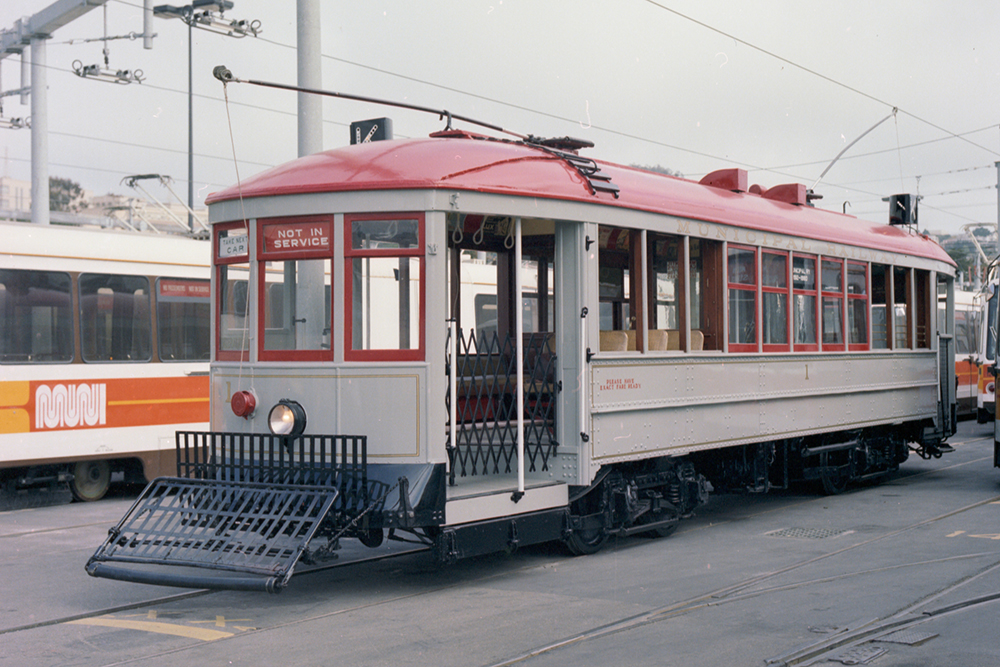
The Original Grey and Red: 1912-1939

When Muni started in 1912, vehicle paint colors were used to distinguish one transit service from another. Muni’s very first streetcars were painted grey with red windows and roof. Gold was used for lettering, vehicle numbers, and decorative lines. This combination gave the cars a simple yet elegant look.

Color photo from 1980 of Muni streetcar 1 painted grey with a red roof and windows.

Seen here at Green Division rail yard around 1980, Streetcar 1 was built in San Francisco in 1912. It has been restored and operates today during special events.

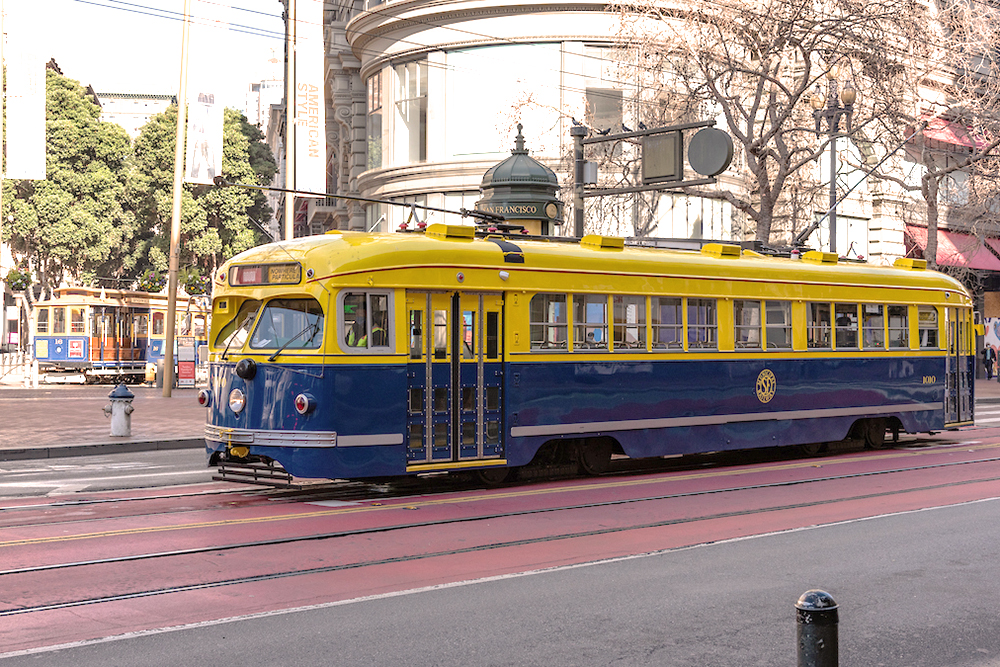
Magic Carpet Cars Bring “Blue & Gold”: 1939-1946

In 1939, five special new streetcars arrived in the city wearing the second major color scheme for Muni. These cars came painted in a deep blue with bright yellow windows and roof. A small red pinstripe ran along the edge of the roof above the windows. Many older streetcars and buses were re-painted in these colors to help unify the look of the system.

Color photo of streetcar 1010 painted blue and yellow on Market and Powell Streets.

Today, Streetcar 1010 is painted with Muni’s blue and gold colors. The Western Railway Museum has the only surviving streetcar that originally had this paint scheme.

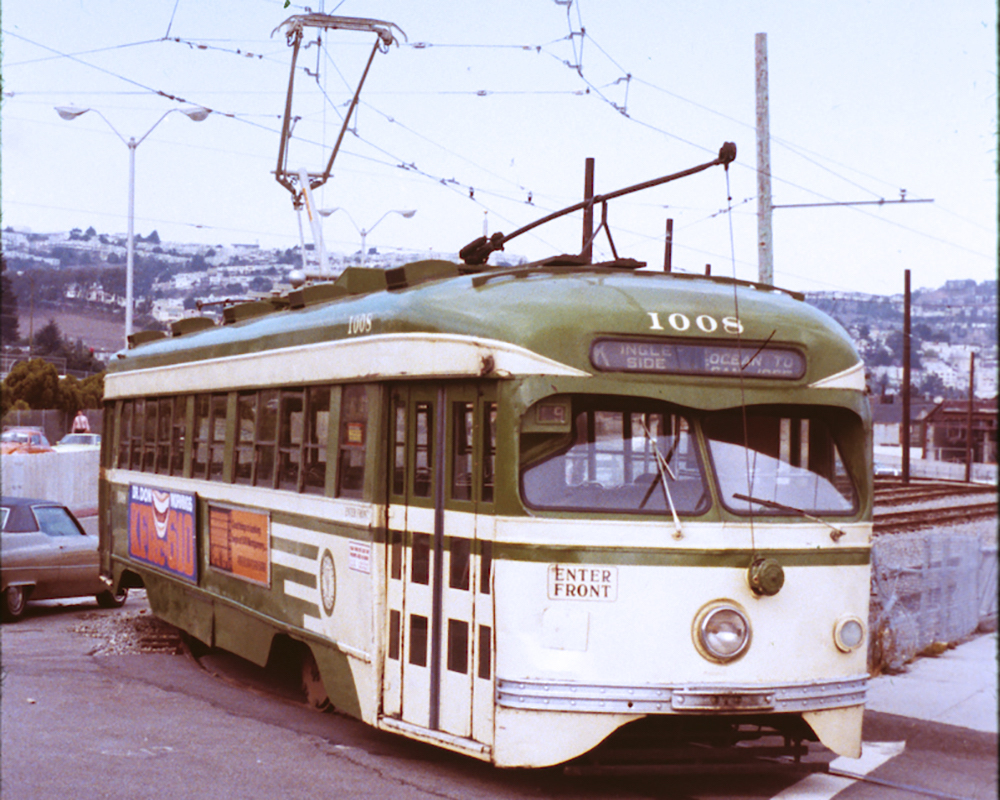
Muni Gets its “Wings”: 1946-1975

A short time after the blue and gold colors came out, a new paint job was launched in 1946. After merging with the Market Street Railway company in 1944, Muni needed a way to unify the two organizations. The new color scheme was a good way to show the public there was no longer two competing transit systems. Known as the green and cream “wings” livery, it used green on the body, windows, and roof of vehicles. Cream was used for the front, stripes above and below the windows, and a decorative design reminiscent of wing tips on the sides. This livery is perhaps one of the most well-known among older-generation San Franciscans and could even be seen on some vehicles into the early 1980s.

Streetcar 1008 painted green and cream colors with pantograph installed in place of trolley pole.

This photo taken in the mid 1970s shows the “green and cream wings” livery once worn by hundreds of Muni vehicles. This car was delivered to Muni in 1948 and still operates today.

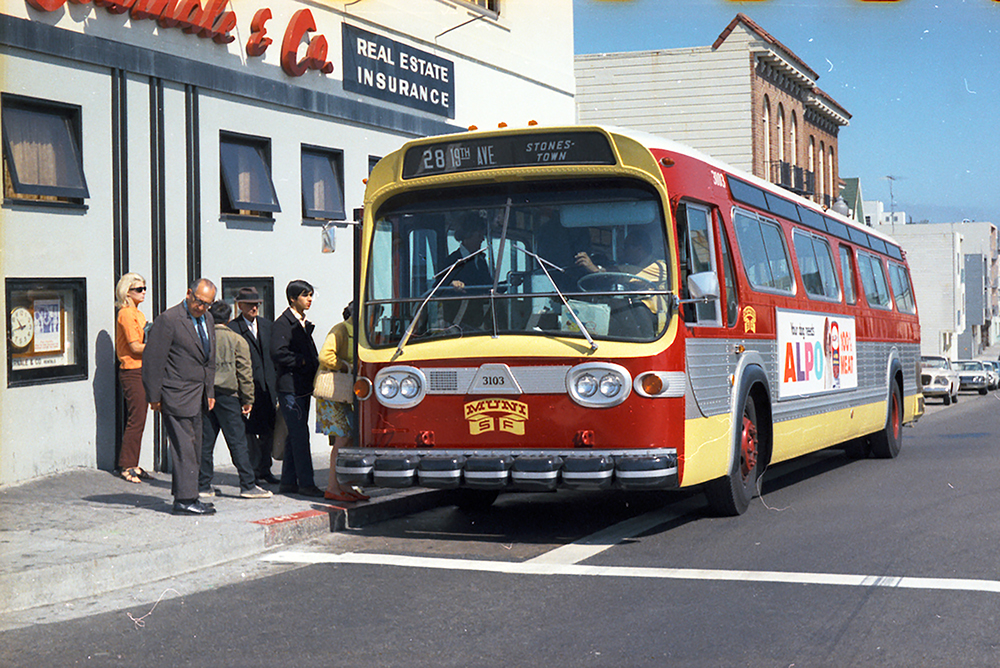
A New Look in “Maroon and Gold”: 1969-1975

Following the green and cream colors came a short-lived but notable paint scheme came in 1969. Muni was trying to revamp its look and introduced the “Maroon and Gold” paint job with a new logo and driver uniforms. The styling of the new logo and maroon color were borrowed from the California Street Cable Cars but first used on brand new buses from General Motors.

People boarding Muni bus painted red and yellow on 19th avenue.

This photo from 1969 shows a new GM bus with Muni’s fresh logo and paint job. Today, Muni has one of this type of bus in its vintage bus fleet.

“Sunset” Livery Rebrands Muni: 1975-1995

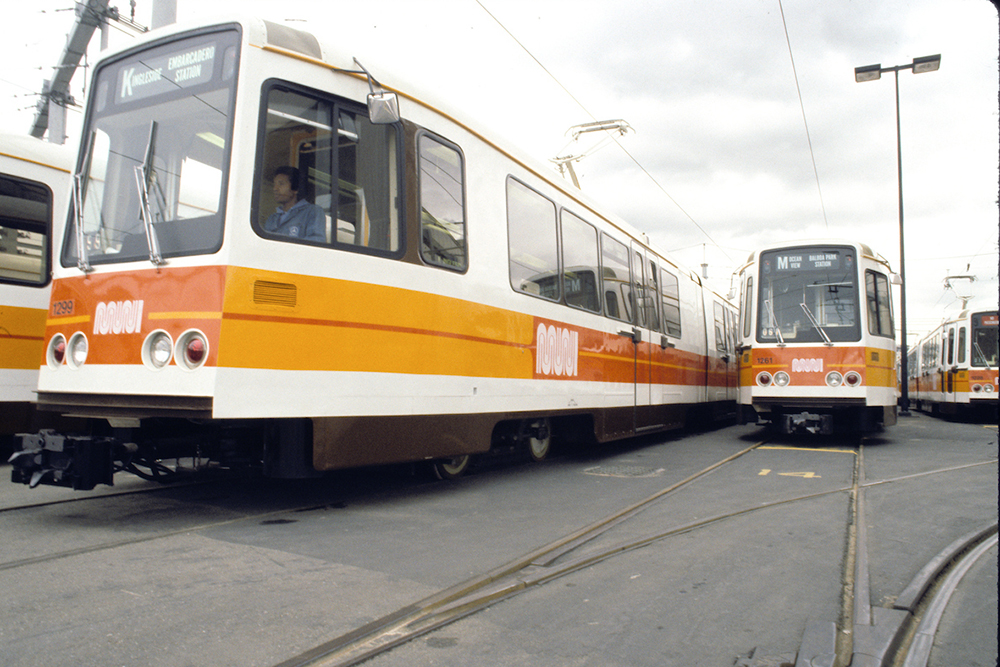
Perhaps one of the most well-known paint schemes was the “Sunset” livery unveiled in 1975. This time, Muni contracted with the world-famous advertising company Walter Landor & Associates for a complete branding package. The new look included everything from a squiggly “Worm” logo, vehicles painted white with “California Poppy” and “Sunset Glow” stripes, new bus stop signage, and matching brown driver uniforms. The new brand was launched at a perfect time. Hundreds of new buses and trains were coming in and Muni was about to open the Muni Metro subway system. Together, these changes really gave riders a fresh, modern transit system.

Muni light rail vehicles painted white, orange, and yellow in rail yard.

Muni’s new 1975 colors were meant to provide a clean look for the system.  Today, many riders remember this paint scheme and logo with nostalgia.

Returning to the Roots with “Silver & Red”: 1995-Present

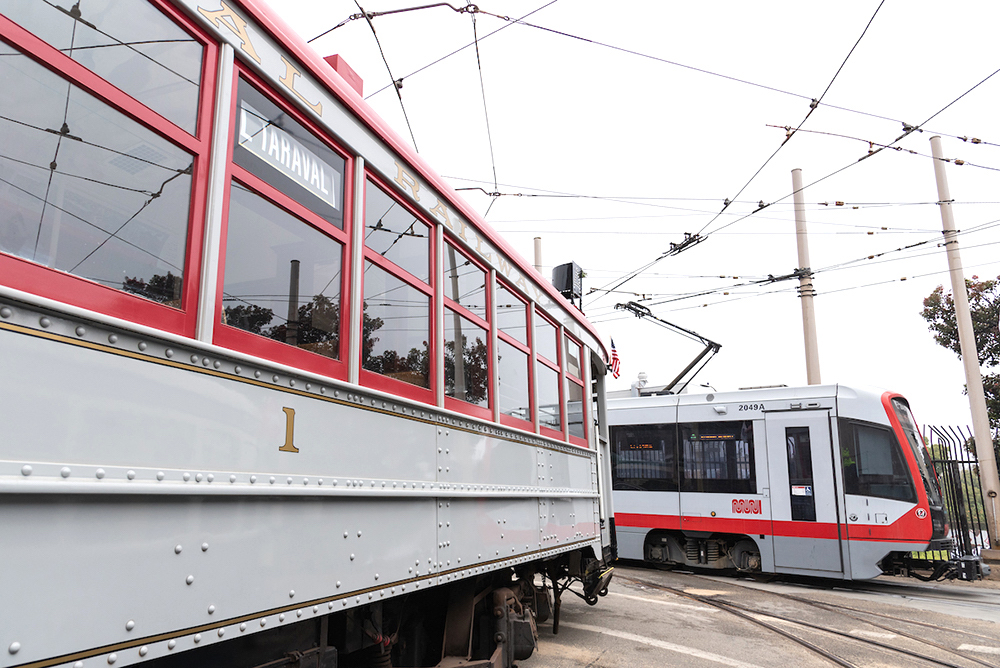
Starting in 1995, Muni returned to its roots with a revised version of the original grey and red color scheme. First used on new light rail vehicles known as “Breda” cars, the new paint features silver with red striping. These colors were phased in over nearly two decades in three variations, depending on the type of vehicle. Today, every bus and rail car in the system, excluding historic vehicles, uses the silver and red look.

Streetcar 1 and LRV in rail yard, both painted in grey and red.

While the colors today fit right in with the modern era, they harken back to the original grey and red of Muni’s very first streetcar.

Aside from the six major color combinations listed here, there were at least five more that have been used at one time or another. Some of these were variations on the main color theme and others were used only on certain vehicles.


Published August 30, 2022 at 12:12AM
https://ift.tt/rciy8Po

Friday, August 12, 2022

How Improving Muni Also Makes Life Better for Drivers

How Improving Muni Also Makes Life Better for Drivers
By Andrea Buffa

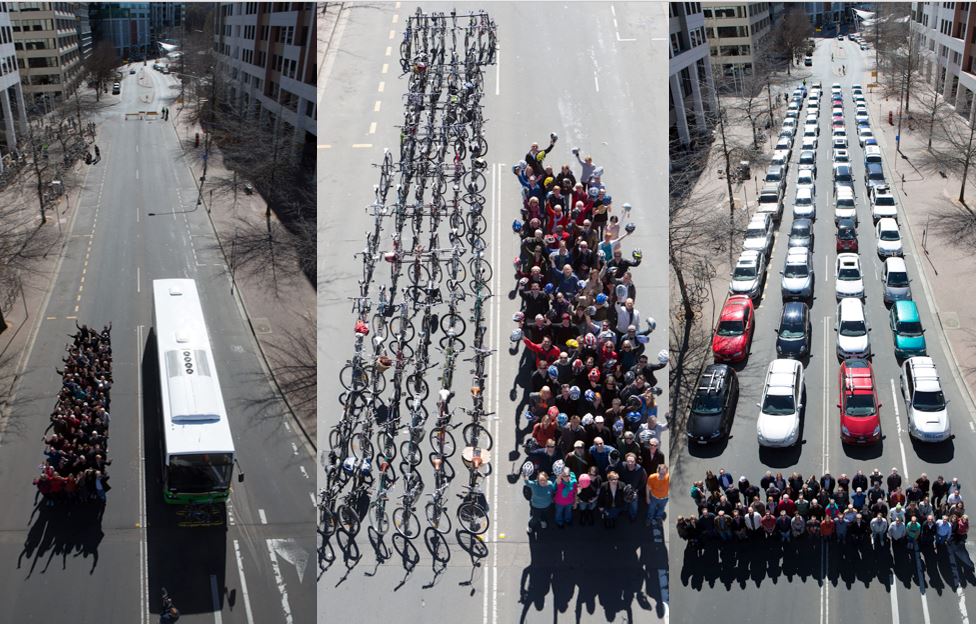
Side-by-side photos of people on a bus, on bikes and in cars; showing a lot more space on road when people use bikes or buses.

Photo credit: We Ride Australia

If you mostly drive to get around San Francisco, you may be wondering, “what has the SFMTA done for me lately?” San Francisco is a “transit first” city, so at the SFMTA we focus our resources on making it easier for San Franciscans to get around by public transit as well as by biking, walking and personal mobility device. While it may seem like adding transit lanes and protected bike lanes doesn’t have anything to do with driving, in fact, it does. 

Since San Francisco doesn’t have room to give more space to roads, we have to change the way we use the limited space on our existing streets. (Not that adding more roads reduces traffic anyway – check out this article.) City Traffic Engineer Ricardo Oleo puts it this way: “When you have a city like San Francisco that was built with density in mind, having everyone drive is not a viable option. There’s not enough room to have that happen. It’s not geometrically possible. You’d have debilitating amounts of congestion without Muni.” 

A well-designed city gives people choices. The many San Franciscans who already do choose to take Muni, walk or bike to get around are taking some pressure off the city's roadways. Imagine if everyone on the 49 Van Ness/Mission that’s zipping down the new Van Ness Bus Rapid Transit corridor were instead driving on Franklin and Gough. That would translate into another 21,000 cars in traffic on a typical day! And think about what congestion would look like on Fell Street if the hundreds of people who use the protected bike lanes there were behind the wheel of a car? 

Every person who takes Muni to get to the Chase Center, their workplace or their doctor’s appointment is one fewer car on the road. So, everything we do to make Muni more appealing—whether it’s transit lanes, new buses or smart traffic signals that give transit priority —is also good for drivers.  

Every person who walks, bikes or hops on an electric scooter to get to Golden Gate Park or pick up something at the local pharmacy is one fewer car that needs a parking space. So, everything we do to make it safer and more appealing to use active forms of transportation is also beneficial for the people who do need to drive to those destinations. 

Bikes take up far less space on the road than cars, and Muni buses and trains can transport a significant number of people in a compact space. 100 people traveling in personal vehicles take up 4,500 square feet. The same 100 people on bikes takes up about 1,200 square feet. And if they were all in a bus? They would take up only 520 square feet. They would also be responsible for far fewer greenhouse gas emissions. 

Reducing greenhouse gas emissions is a priority for the SFMTA and the city of San Francisco. But we realize most people make travel decisions based on their personal lives – not on San Francisco’s climate action plan. As a transportation agency, our job is to make transit, walking and rolling the best travel options for more people. If we’re able to do that, we’ll help fight the climate crisis and simultaneously improve the driving experience for people who still need to drive.  


Published August 12, 2022 at 10:46PM
https://ift.tt/P2O5dU8

Friday, August 5, 2022

Bayshore Boulevard Quick-Build Project Update

Bayshore Boulevard Quick-Build Project Update
By Adrienne Heim

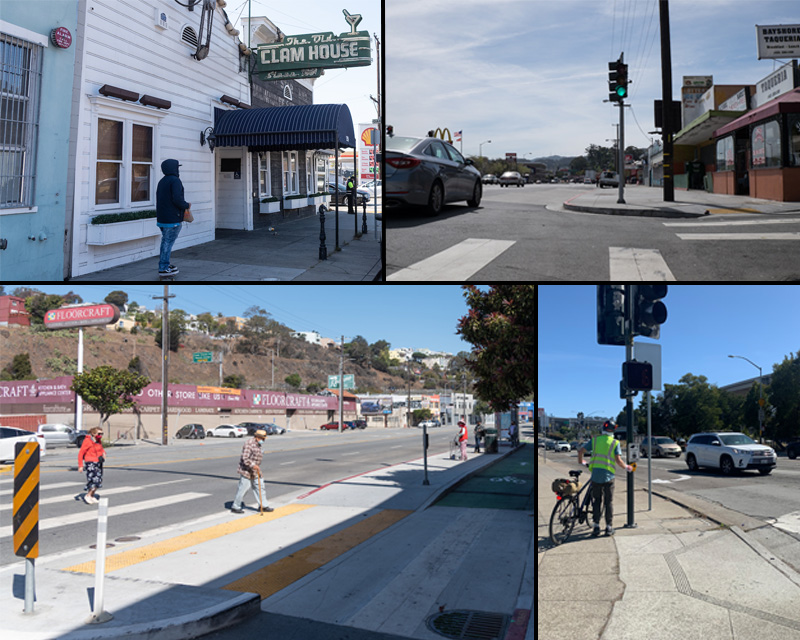
Bayshore Boulevard is a mixture of industrial and commercial ruggedness mixed with historic and family run small business charm. Bayshore Boulevard is also a busy street that runs parallel to Highway 101 and is nestled between Bayview, Bernal Heights, Potrero Hill and Mission neighborhoods. Interestingly enough, one of the oldest restaurants in San Francisco, The Old Clam House, built in 1861 and recently re-opened after two years of closure due to the pandemic and management changes. As you begin to walk Bayshore and Oakdale heading south towards Silver Avenue, you’ll see workers grabbing food and saying hi to owner Tarik at Bayshore Taqueria, you’ll notice parents dropping off their children at the family run business American Gymnastics Club and folks walking to catch the 9 or 9R Bayshore or 23 Monterey Muni bus. For over 30 years, people have been visiting legacy business Flowercraft Garden Center, near Bayshore and Cortland to decorate their homes, patios and backyards with native plants and its sister business Floorcraft, who’ve been in business since 1941. Not only that, but you’ll also see people walking their carts or crates filled with aluminum and glass bottles to family run business Our Planet Recycling Center or folks biking around Bayshore and Industrial.

top left is Old Clam House, then top right Bayshore Taqueria, bottom left is Floorcraft and Muni customers waiting to board at Bayshore and Cortland. Last photo (bottom right) is a bicyclists waiting to cross Industrial at Bayshore.

Bayshore Boulevard has a lot of vehicle/pedestrian/bike activity given all the small and big box businesses sprinkled along the corridor and its important role as a major connector to the north and south sections of San Francisco. The corridor is on the Vision Zero SF High Injury Network, which means 75% of the city’s traffic injuries and fatalities occur on just 13% of San Francisco streets. From 2015 to 2021, 98 traffic collisions have been reported on Bayshore Boulevard between Silver and Jerrold avenues. A total of 11 bicycle-vehicle collisions resulted in four severe injuries and 10 total pedestrian-vehicle collisions resulted in two severe injuries. A few months ago, a fatality occurred between a motorcyclist and another vehicle near Bayshore and Flower.

Mode Collisions

Bike Icon

Bike

11 total collisions with four severe injuries.

Walk Icon

Walk

10 total collisions with two severe injuries.

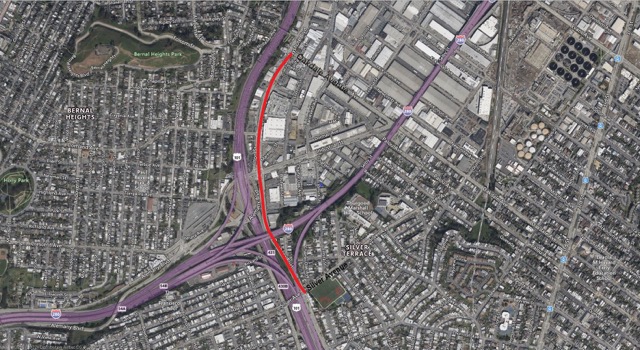
To improve access and safety for people walking and bicycling on Bayshore Boulevard, the SFMTA is proposing a quick-build project on Bayshore Boulevard from Silver to Oakdale avenues (Section 1) and potentially improvements in the future on Bayshore Boulevard from Oakdale to Jerrold avenues (Section 2).

Extant of the quick-build project on Bayshore Boulevard from Silver to Oakdale avenues (Section 1) and potentially improvements in the future on Bayshore Boulevard from Oakdale to Jerrold avenues (Section 2).

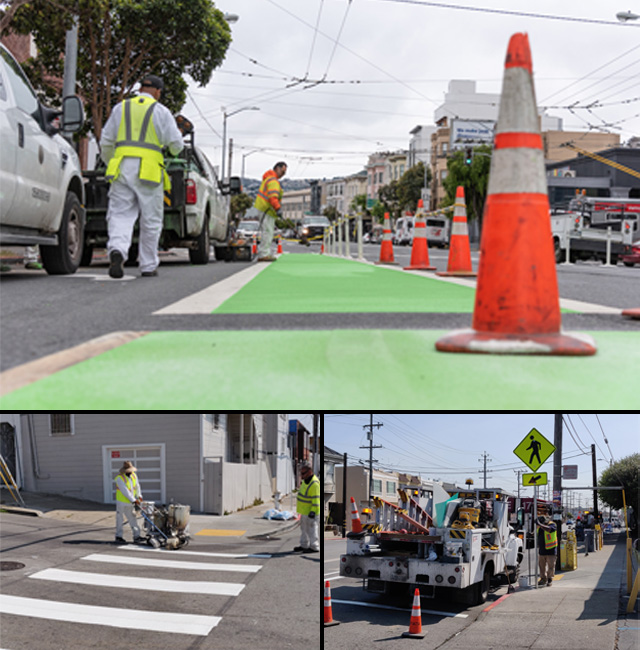
A quick-build project increases safety for all users of Bayshore Boulevard by implementing relatively fast improvements with inexpensive treatments within months, such as: 

  • Paint
  • Traffic delineators
  • Street signs
  • Parking and loading adjustments 

SFMTA Shop Staff painting a bike lane, Shop staff painting a crosswalk, Shop staff installing a pedestrian crossing sign.

The project is then evaluated within 24 months after construction is completed through the Safe Streets Evaluation Program to understand whether the transportation safety treatments are working, need to be revised or removed.   

In May and June, the Bayshore Quick-Build team connected with businesses and stakeholders who use the corridor and there were several takeaways:

  • Unsafe vehicle speeds on the Bayshore 
  • Need for greater protection between the vehicle travel lane and bike lane
  • Need for improved pedestrian and bike safety 
  • Need for improved neighborhood connections by bike

Comments from our survey include:

“Walking in that area is awful today and generally I just feel unsafe if I am not in a car.”
"This is not supposed to be a freeway! It is not safe as it is now and inspires unsafe driving and speeding.”
“I am more concerned about the bike connections north to south. I would love to be able to bike on Bayshore more, but the connections are horrible.”

Based on the feedback received, the project team is considering refinements to the project proposal and will continue to provide updates to all project stakeholders.

The current project timeline includes:

Section 1 (Bayshore Blvd. from Silver to Oakdale Avenues)

  • July to August 2022 – Round 2 Community Outreach and Final Design (showcase the final proposed project design and answer questions). 
  • Summer/Fall 2022 – Approvals/ Legislation for Section 1 – Bayshore Boulevard from Silver to Oakdale avenues (Public Hearing anticipated in late September)
  • Fall 2022 – Construction begins on Section 1 – Bayshore Boulevard from Silver to Oakdale avenues 

Section 2 (Bayshore Blvd. from Oakdale to Jerrold Avenues)

Section 2 will be further analyzed and potentially become part of a future project where the needs of the roadway can be better met through longer-term, capital construction work. 
Stay tuned to see what is in store for a safer Bayshore Boulevard for all users. 
Learn more about the project and subscribe to project updates by visiting the Bayshore Boulevard Quick-Build Project.


Published August 05, 2022 at 11:06PM
https://ift.tt/KJ8ryLS

Thursday, August 4, 2022

Keeping Muni Riders Safe

Keeping Muni Riders Safe
By Andrea Buffa

After several years without a major violent incident on Muni, we’ve recently experienced two tragic shootings. On June 22, two passengers got into an altercation, and one of the passengers fatally shot another passenger and injured a bystander. The shooter was quickly apprehended by the San Francisco Police Department (SFPD) thanks to our collaboration and use of clear, state-of-the-art surveillance cameras on board our vehicles. On August 3, there was a targeted shooting on a Muni vehicle driving through the Sunnydale neighborhood; one passenger was killed, and a bystander sustained a minor injury. SFPD’s Homicide Detail is investigating the incident, and we are fully cooperating by providing the SFPD with onboard and street-facing video data. 

We offer our deepest sympathies to the victims and their families who are suffering right now.  

While these recent incidents appear to be an anomaly and instances of isolated, targeted confrontations, we are working resolutely to make sure all Muni riders are safe and can be confident riding our buses and trains. We were already increasing security and safety across our system and are taking additional steps in response to the recent incidents. 

  • Increased staff presence on our vehicles:
    Having uniformed personnel present on Muni vehicles is a visual deterrent against crime and other problematic behavior. 
    • Our Muni Transit Ambassadors are San Francisco community members with deep ties to their neighborhoods. Many of them grew up riding Muni. They ride specific Muni routes to assist customers, defuse and deter any conflicts, prevent acts of vandalism and assist bus operators. We currently have 21 Muni Transit Ambassadors in the field and are hiring an additional 20 ambassadors. 
    • Our Transit Fare Inspectors also ride Muni routes, and they do more than make sure our riders comply with our fare policies. They also provide riders with service information and information about fare programs and kiosk locations.  
    • We’ve been informed by the SFPD that they will be providing an increased presence on Muni in the coming weeks. 
    • At Muni stations, station agents are monitoring video footage from cameras that are set up throughout the station and will take action if there’s an emergency, either by going to the scene or by contacting emergency personnel. Any time you’re concerned about a safety issue or have a question, you can walk up to the booth and talk with the station agent.
  • Extensive and effective video surveillance program: 
    • We’ve installed high-quality video cameras throughout our system to be able to document crimes and provide the documentation to the police. In multiple instances, this video footage enabled the police to identify and arrest people who perpetrated crimes.  
    • Each bus is equipped with at least 11 cameras that are recording any time the bus is running. The footage is monitored by staff in our video surveillance unit. 
    • We are constantly upgrading and improving our video system. Currently we are hiring more team members to support this work.
  • New Equity Safety Initiative: 
    • All forms of gender-based and race-based harassment, assault and sexual violence are strictly prohibited throughout the SFMTA system including on vehicles and at stops and facilities. Threatening, harming or harassing passengers or SFMTA employees is illegal and will not be tolerated.  
    • We recently implemented an initiative to prevent this type of harassment and violence on Muni. Later in August, announcements will be posted throughout the Muni system making it clear that this behavior is not tolerated. Riders can now report gender-based harassment and violence using the Muni Feedback form (SFMTA.com/MuniFeedback) or by calling 3-1-1. Non-English speakers should call 3-1-1 for language-assisted reporting.   
    • We will be tracking this data to determine where more resources should be directed to make sure none of our riders ever have to tolerate gender-based harassment or violence. Learn more about our Safety Equity Initiative (SFMTA.com/SafetyEquity) 

The safety of our customers and staff is a top priority for the SFMTA. We will continue our efforts to make sure Muni is a safe and welcoming environment and update you with our progress. In the meantime, if you need to report an incident you see happening on Muni, please follow these steps. 

  • What to do in the event of a crime on Muni 
    • First and foremost, stay safe: Try to remain calm and exit the vehicle if necessary and safe to do so. Never put yourself in danger. 
    • Alert authorities and your Muni operator: Call 911 to report the crime as soon as it's safe to do so. Alert the Muni operator if the operator doesn't seem to be aware so they can take steps to keep everyone safe. You can also alert any other SFMTA staff member you see (they’ll be wearing a Muni vest). 
    • Remember and report helpful details: When reporting an incident, accurate details can make all the difference in enabling police and Muni staff to respond effectively. When a crime occurs, note details like the time, location and Muni vehicle number. If safe, also note a physical description of any suspects.  


Published August 05, 2022 at 05:06AM
https://ift.tt/l2svK1i

Tuesday, August 2, 2022

Muni is Ready to Take Kids Back to School

Muni is Ready to Take Kids Back to School
By Shalon Rogers

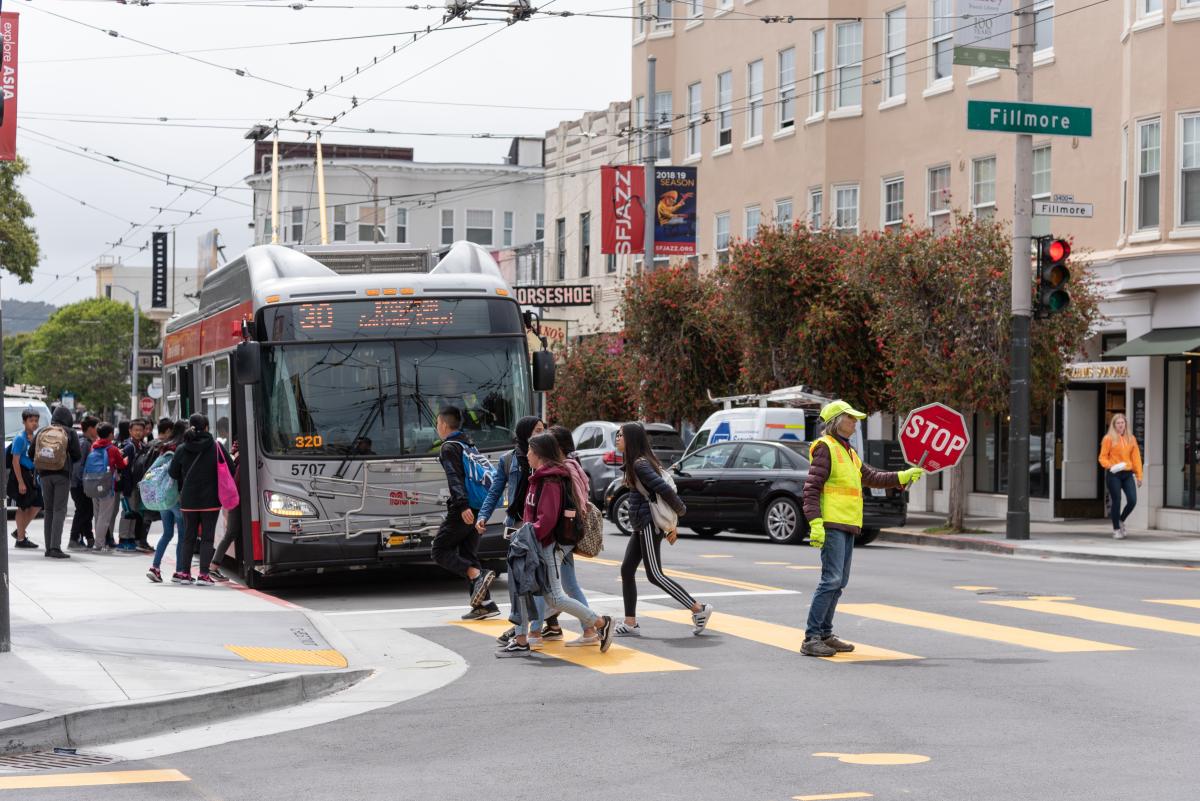
Students boarding the 30 Stockton bus, as well as crossing the street to catch the bus. 

Photo caption: Every SFUSD elementary, middle and high school is served by at least one Muni route and are within a five-minute walk of a Muni stop 

As the first day of school for San Francisco students approaches, the SFMTA wants to ensure that families have reliable, efficient transportation to get them to and from school.  

To help determine which bus your child can take to school, the SFMTA has put together a list of Muni routes that serve SFUSD schools. This resource shows the closest transit options for all San Francisco public elementary, middle and high schools. You can also plan your student’s door-to-door trip on Muni, biking or walking with the SFMTA’s trip planner

Service changes implemented in July, including the restoration of the 2 Sutter, 6 Parnassus and 21 Hayes, as well as the extension of the 23 Monterey down Sloat Boulevard and the 43 Masonic to the Marina, have ensured that at least one or more Muni routes provides transportation to all SFUSD schools.   

Additionally, Muni school trippers will provide service throughout the school year. School trippers are extra buses on existing routes that meet students after school at some of the city’s largest middle and high schools. They begin their route near a school site to help prevent crowding and pass ups on busy Muni routes after school, and then continue along their regular route. Schools served by a school tripper can be found on the Muni Routes to City Schools page.  

Crossing guards will also have a large presence near school sites to assist families with arriving and departing school safely. As part of the SFMTA’s Crossing Guard Program, 175 crossing guards will cover 106 public and private schools at 154 intersections throughout the city. 

All youth 18 and younger can take advantage of the SFMTA’s Free Muni for Youth program, which no longer requires proof of income to participate. A Clipper Card is not required for buses and trains, however it is needed to receive a free fare on cable cars. For those who ride cable cars regularly, a cable car pass is available for youth 5 to 18 years old; youth four and under always ride for free.  

Following the latest guidance from the California Department of Public Health (CDPH), the San Francisco Department of Public Health (SFDPH) and the Federal Transit Administration (FTA), masks are recommended but no longer required in SFMTA facilities or vehicles. However, to help protect those who remain at higher risk to COVID-19, including older adults and some people with disabilities, we recommend that masks continue to be worn on transit.  

With just a few weeks left before school begins, let Muni help you enjoy the remaining days of summer. Ride the 18 46th Avenue to the Legion of Honor or San Francisco Zoo or take the 28 19th Avenue to the Golden Gate Bridge. Head to Ghirardelli Square on the Powell/Hyde Cable Car or, for a faster trip, ride the 49 Van Ness and enjoy San Francisco’s first bus rapid transit corridor. However you spend the remaining days of summer, know that Muni will help get you and your family there.  


Published August 02, 2022 at 09:17PM
https://ift.tt/71bCsBW

Friday, July 29, 2022

Six Generations of Pint-Sized Buses Serve Muni’s Toughest Routes

Six Generations of Pint-Sized Buses Serve Muni’s Toughest Routes
By Jeremy Menzies

For over 80 years, special fleets of shorter than usual buses have been reserved for some of the City’s toughest routes. Winding through tight bends and climbing up steep grades, these pint-sized coaches ensure access to transit in neighborhoods where standard-length buses cannot go. As the SFMTA phases in a brand-new batch of shorter buses, here’s a look at all six generations of Muni’s “mini” fleet.

“Baby White” Buses: 1938-1975
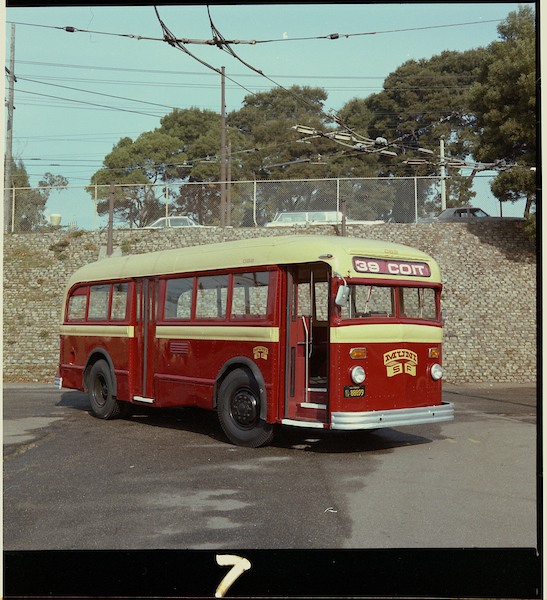
The first generation of short-length buses was intended for regular use on all Muni bus routes. Made by the White Motor Company in Cleveland, Ohio, this fleet came to SF in 1938. The buses were nicknamed “Baby Whites” after a group of longer White Co. buses arrived in 1947. In the mid 1950s, all but three of these buses were retired. The three saved continued to run on the 39 Coit Tower route until 1975—in service longer than any other bus before or after.

Muni bus 062 in red and yellow paint job with “39 Coit” route sign. 
This bus has served longer than any other in Muni’s fleet, wearing at least three different paint schemes and running regularly for 37 years straight. Restored in 2012 to its original orange and black colors and number (042), it’s back in special service today during Muni Heritage over 80 years after arriving in SF.

“Mini Macks”: 1970-1979
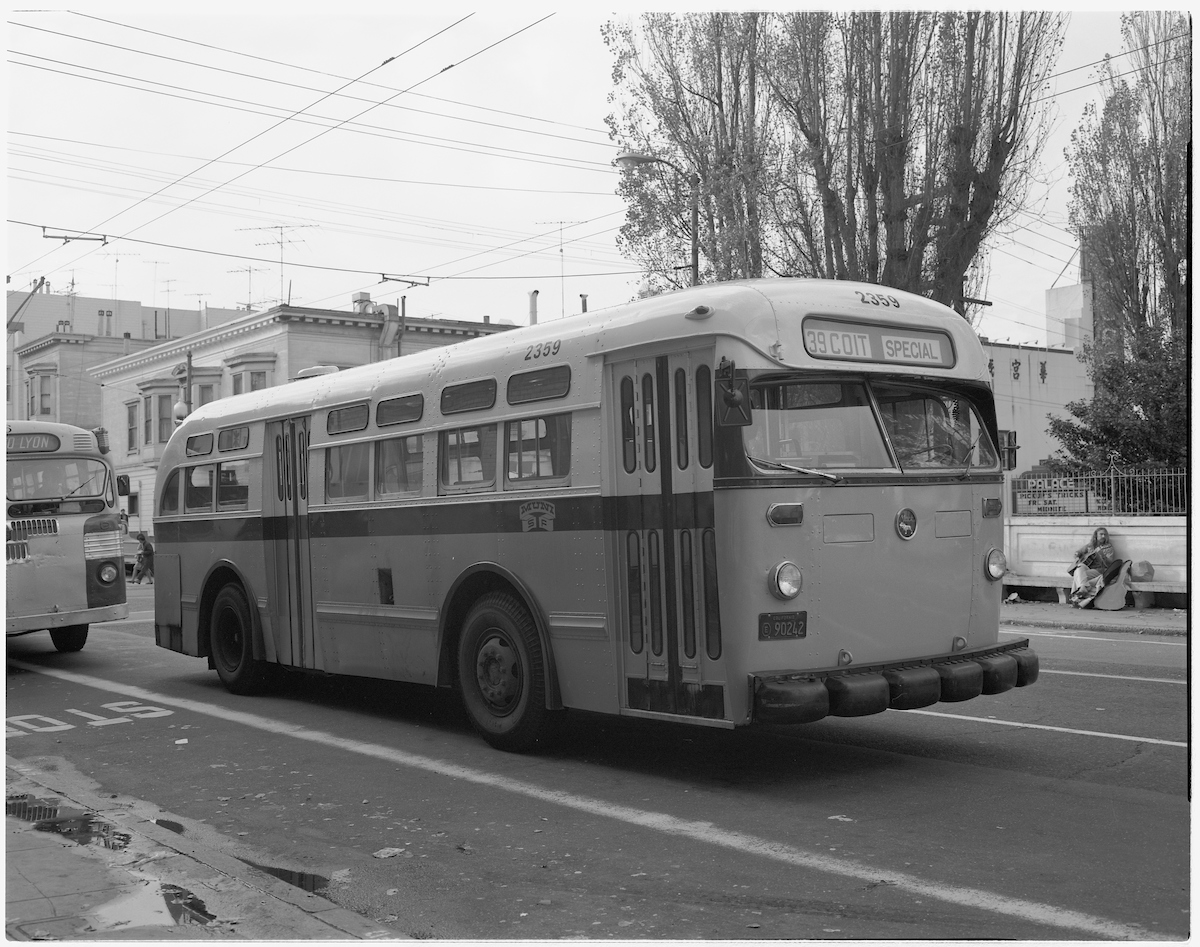
Unique among all the shorter buses that have served SF is a small number of buses built by the Mack Truck Company. In the 1950s, Muni contracted with Mack to lease a large fleet of 450, 38-foot long buses. As these were returned at the end of the lease in 1969-1970, two buses were saved for a special reassignment. Shortened by several feet by cutting out a section of the bus, these two coaches were meant to replace the 30-year-old White buses on the 39 Route.

Bus on 39 Coit route at bus stop across from Washington Square Park.
Delivered in 1957 as a 38’ long bus, this and one other Mack bus were chopped down and painted in Muni’s Maroon and Gold colors around 1970. Both served the 39 Coit for nearly a decade.

The “Amys”: 1974-1991
The first fleet of buses specifically purchased to fit the need for smaller buses was a batch of 100 buses built by the AM General Company in the mid 1970s. Nicknamed “Amy’s”, these buses were also the first to arrive wearing the new Muni orange and white Sunset livery and famous “Worm” logo. Today, bus #4154 is part of our vintage bus fleet, operating in special service during Muni Heritage.

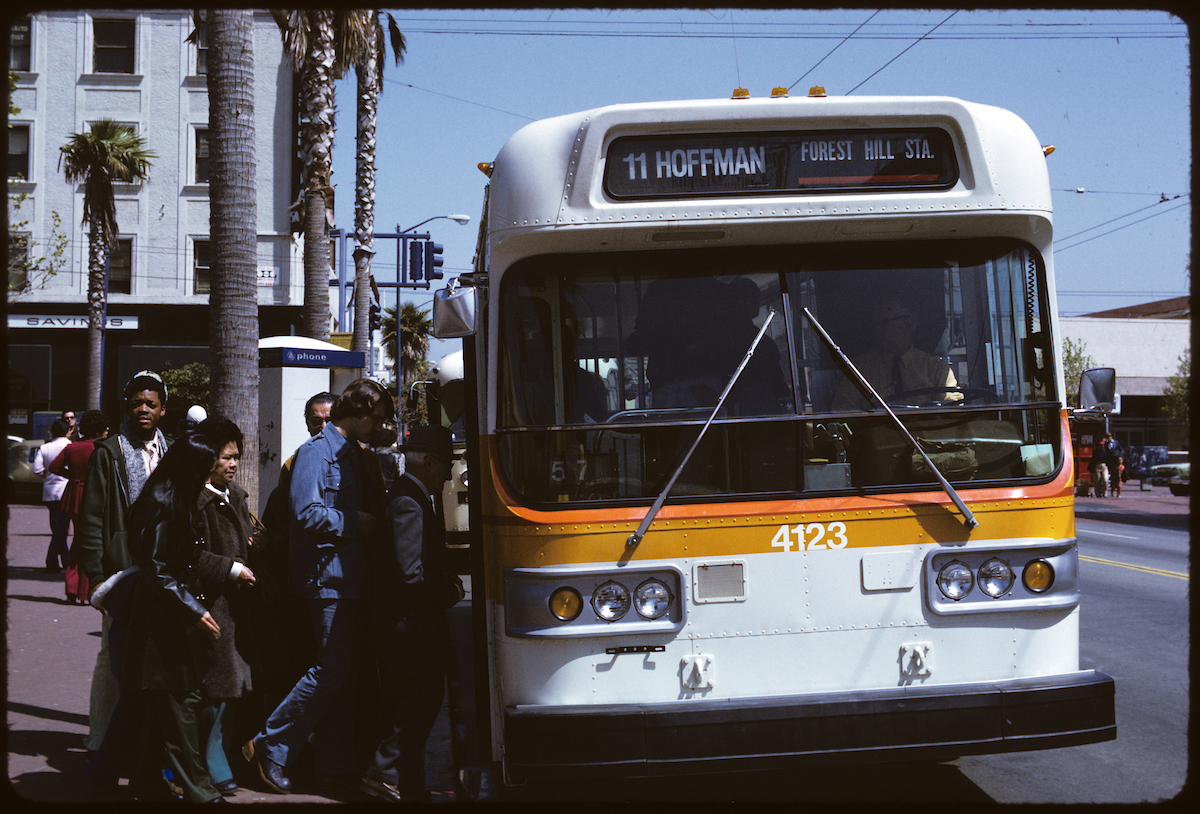
People boarding bus on Muni 11 Hoffman route. 
People board an AM General bus running on the 11 Hoffman route at Mission and 16th in this 1975 photo.

Orion Fleet #1: 1990-2007
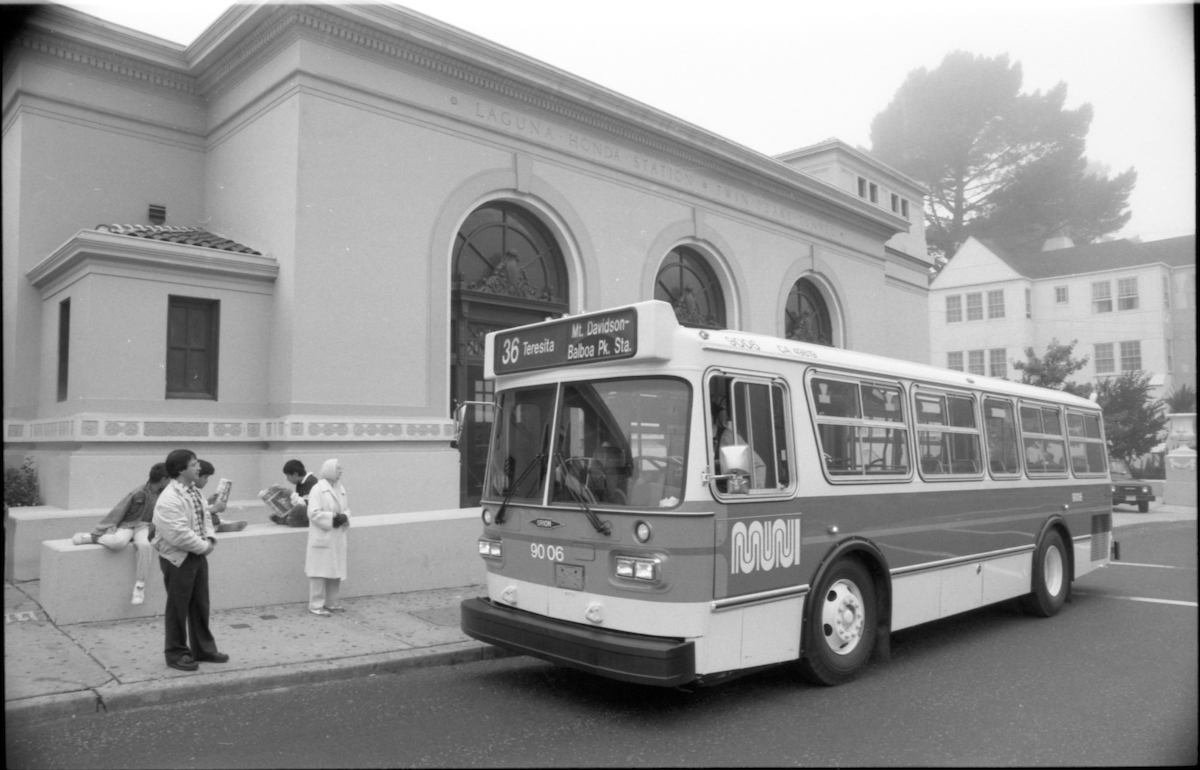
As the AM General buses aged, Muni bought replacements from the Orion bus company in the early 1990s. Even shorter than their predecessors, these were well suited to routes like the 36 Teresita, which winds through Twin Peaks, Diamond Heights, Glen Park, and Bernal Heights.

bus with people standing on sidewalk, forest hill station, and fog-covered trees in background.
Forest Hill Station sits shrouded in fog in this 1990 photo of a new Orion bus on the 36 Teresita Route.

Orion Fleet #2: 2007-Present
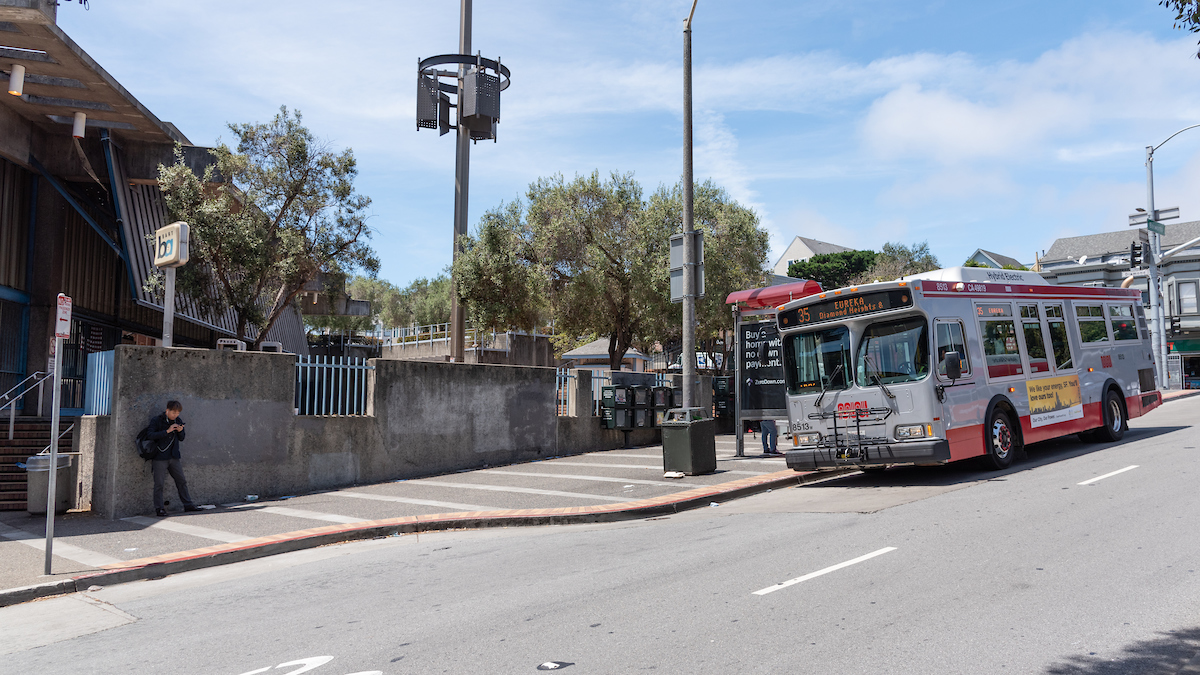
Following the original batch of Orion buses was a second that hit the streets in 2007. Purchased simultaneously with standard 40-foot-long buses, these were among the first low-floor hybrid buses to serve San Francisco. The new design of these 30 and 40-foot Orions provided easier boarding and quieter, more efficient operation.

bus in front of stop and sidewalk with BART station in background.
A second-generation Orion bus stops at Glen Park BART on the 35 Eureka Route.

ENC EZ-Rider II: 2022-
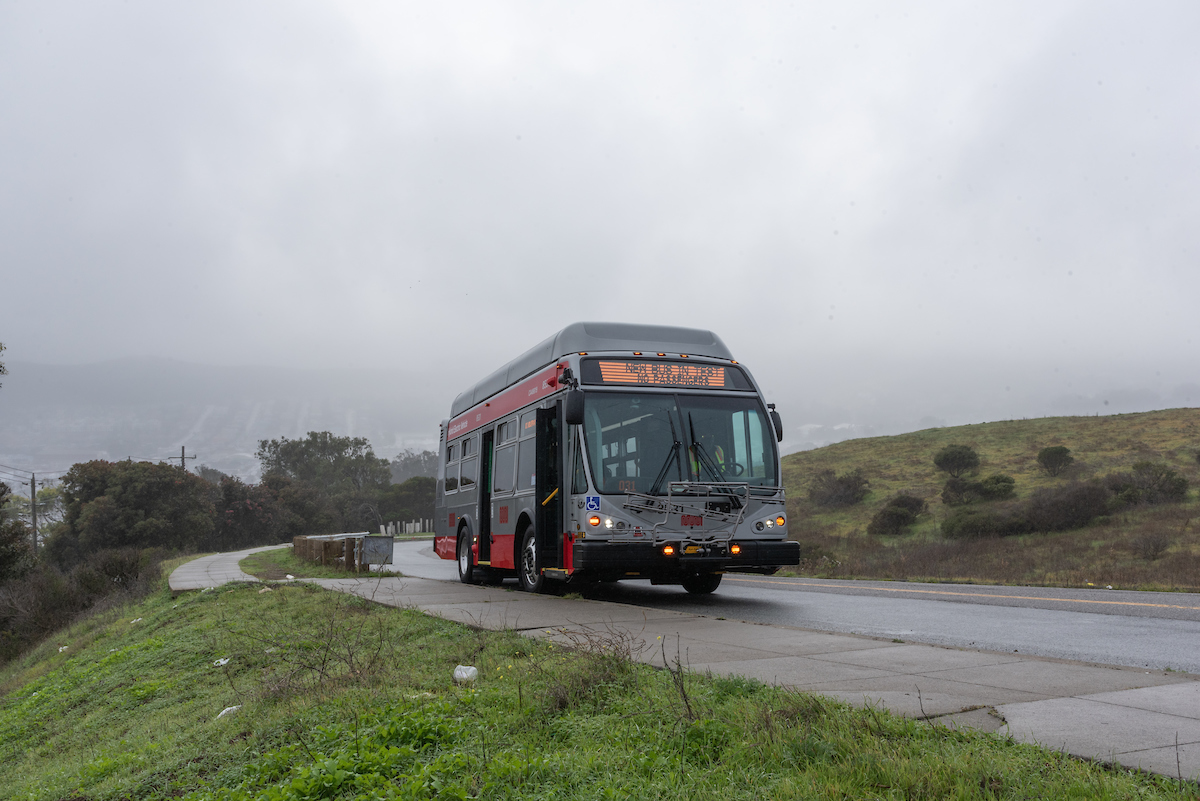
Today, the SFMTA is replacing its 15-year-old fleet of 30-foot Orions to provide more reliable, cost-effective service on the routes historically served by shorter buses. These new buses, a few of which are already in service, are built by ENC (El Dorado National-California) based in Riverside. At 32-feet long, they have seating for around 25 passengers and room for multiple people using wheelchairs. The first of these buses arrived for acceptance and testing in late 2021 and entered service earlier this year.

Muni bus parked on street with fog and hills behind.
Climbing a grade in McLaren Park, a new 32’ ENC bus tests on the 56 Rutland in late 2021.


Published July 30, 2022 at 03:01AM
https://ift.tt/Fu2vnIy

Wednesday, July 13, 2022

Permanent Adaptive Cycling Program Unveiled in Golden Gate Park

Permanent Adaptive Cycling Program Unveiled in Golden Gate Park
By Maddy Ruvolo

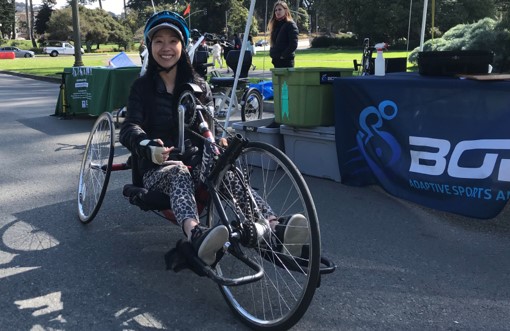
A woman sits on an adaptive recumbent bike in Golden Gate Park; a sign for BORP is in the background.

As adaptive bikeshare enthusiasts know, cycling isn’t only for people who are able-bodied. On Saturday, a permanent adaptive cycling program that will serve Golden Gate Park and the Great Highway launched in partnership with San Francisco Recreation & Parks and the Bay Area Outreach and Recreation Program, commonly known as BORP.

The free program matches people with disabilities to adaptive bicycles by advance reservation. The BORP Cycling Center hosts one of the largest collections of adaptive bikes in the world, including handcycles, recumbent bikes, side-by-side tandems, and other models. The program serves children, youth, and adults with physical and sensory disabilities, as well as their family and friends.

The Adaptive Cycling Program will run on Saturdays from 1 to 4 p.m. by appointment only from April through October. Locations will alternate between the Music Concourse in Golden Gate Park next to the new accessible bandshell lot and the Great Highway at Judah Street. To reserve a bike, contact the BORP Cycling Center at 510.848.2930 or cycling@borp.org.

In 2021, the SFMTA and Rec and Park ran a pilot adaptive bikeshare program for people with a broad range of disabilities in Golden Gate Park. The program was held in partnership with the Metropolitan Transportation Commission and Bay Wheels/Lyft. The SFMTA is currently conducting a formal evaluation of the pilot program, but early results tell a clear story: adaptive cycling is a fun and exhilarating option for exercise and recreation.

In both the pilot and new program, BORP staff fit participants to adaptive bikes and help them transfer from their mobility devices when necessary. The pilot program was very popular among participants: survey respondents rated the program 4.76 out of 5 stars and encouraged the City to permanently adopt an adaptive cycling program. Participants shared that the program was a good family outing, with one person coming for the first time on her birthday. Another noted that the program provided a fun and useful way to complete their physical therapy exercises. Seventy-eight percent of participants were first-time adaptive bikeshare riders, and the vast majority of participants surveyed (94%) said they would like to use bikeshare more frequently in the future. The program was popular across age groups: participants had an average age of 38, ranging from 14 to 82 years old.

Reflecting what participants told us they wanted, the new program is near transit, accessible bathrooms and parking, and safe, car-free spaces.

The SFMTA is thrilled to partner with Recreation & Parks and BORP in rolling out a permanent adaptive bike program, and we are also interested in hearing feedback from San Francisco residents and visitors who have not yet had a chance to try out adaptive cycling. If you are an older adult or have disabilities, we want to hear from you! Please help shape the future of adaptive biking in San Francisco by taking our follow-up survey.


Published July 14, 2022 at 06:57AM
https://ift.tt/UIzEQxM

Monday, July 11, 2022

Midyear Check-In: SFMTA Milestones in 2022

Midyear Check-In: SFMTA Milestones in 2022
By Erica Kato

Despite the ups and downs of COVID-19 in 2022, the SFMTA has been highly productive so far this year, keeping everyone moving and supporting San Francisco’s recovery from the pandemic. We increased Muni service in February and April, completed the Van Ness Bus Rapid Transit corridor and have moved forward with our quick-build program that help us reap the benefits of safe street design faster than ever, among other accomplishments.

As we head in to the second half of the year, we continue to think creatively and expedite processes and practices that have traditionally required long lead times. We’re proud to give an update on some of our projects with significant milestones happening before year’s end. There’s a lot to look forward to.

Photo of various Muni riders boarding a Muni Metro train in the subway

Muni riders in the subway


Here's a snapshot of what we’re currently working on:

Muni Service:

  • July 9, 2022: Muni service changes, including the restoration of the 2 Sutter (modified), 6 Haight-Parnassus, 21 Hayes (modified); to address changing travel patterns, modifying 23 Monterey, 28 19th Avenue, 43 Masonic, 49 Van Ness-Mission, 57 Parkmerced, 58 Lake Merced, L Bus. 
  • Fall 2022: Launch of Central Subway, realignment of rail service; service restoration and increased frequency to address changing travel patterns, as resources allow. 

Muni Forward Projects:

  • 29 Sunset Improvement Project outreach to begin 
  • J Church Improvement Project outreach to begin this summer to collect feedback on how to improve J Church. This fall, we will follow up with community on what we heard and what we propose to improve service and reliability on the J Church; late 2022 we will propose community-informed plan to MTA Board for approval  
  • K Ingleside planning with San Francisco County Transportation Authority underway 
  • M Ocean View Transit and Safety Project outreach underway 

Muni Metro Modernization:

  • Subway Renewal Program targeting strategic repair, replacement and enhancements continues with Fix It! Weeks scheduled for August and fall 2022 
  • Train Control Upgrade project goes to SFMTA Board for issuing request for proposal (RFP) in fall 2022 
  • Muni Metro Core Capacity Planning Study underway 

New Buses:

  • 30 El Dorado 32’ hybrid buses to be replaced by end of the year 
  • 9 of 12 electric buses delivered by end of year 
  • 30 Phase II LRV4 vehicles with accessibility improvements to be delivered by end of year 

Customer Experience Improvements:

  • Currently installing and testing new Customer Information System displays systemwide, focusing on neighborhoods identified by our Muni Service Equity Strategy.  
  • Upgraded system replacing the text-based system currently in use with one that uses a sophisticated, accurate vehicle arrival algorithm. Displays are larger and can display graphics. We are also implementing solar-powered signage.  
  • “Soft Launch” with several features will occur in September to support the opening of Central Subway, with more features released in December, and a public announcement in early 2023. Installation of new signage at transit shelters will be completed in January 2023.
  • Safety Equity Initiative to reduce and eventually eliminate gender-based harassment and violence on Muni underway 
  • System maps will be replaced systemwide for July 9 service changes along with station signage being replaced throughout the year

Vision Zero Quick-Build Projects:

  • Lake Merced Quick-Build: Outreach is completed, and project team is aiming for Board consideration to legislate in September, with implementation to follow. 
  • Bayshore Boulevard: Building on successful quick-builds already implemented from the Bayview Community-Based Transportation Plan, this project will continue to address safety needs in the area and has gone through a substantial portion of the outreach phase.  
  • Battery/Sansome: Aiming for MTA Board consideration and legislation this summer. 
  • Franklin Street: In response to a recent fatality in the project area, outreach is underway as of May for the quick-build concept. 
  • Hyde Street: This project builds on already substantial work in the Tenderloin including the recent project on Jones. Goal is to implement in 2023. 
  • Valencia Street: For this pilot project, the goal is to begin outreach in early July, implement and eventually study as an 18-month pilot.  

Capital Projects:

Woman riding in a protected bicycle lane with Muni buses and other vehicles in adjacent lanes

New Parking Protected Bike Lane on Folsom Street in South of Market Area

Please continue to check back and check back often! As projects come closer to completion, we will have in-depth updates on many of these improvements. Our staff has answered the call to serve, and we will continue to step up and keep San Francisco moving. We look forward to seeing you aboard Muni and taking a bike ride or stroll. Be sure to check out the rest of our website and sign up for our text and e-mail alerts for more details on the projects and programs you’re interested in.


Published July 12, 2022 at 03:47AM
https://ift.tt/1TVpd7i

Friday, July 8, 2022

SFMTA Receives $116 Million Award from CalSTA

SFMTA Receives $116 Million Award from CalSTA
By

Two Light Rail Vehicles at a Station Platform

A Snapshot from our most recent round of service changes

Back in June, we published a blog about the loss of Proposition A, the Muni Reliability and Street Safety Bond, and what it would mean for our infrastructure projects going forward.

In the post, we reaffirmed our commitment to find alternative sources for these funds. We know that improving Muni and making streets safer remain priorities for our community—and we’re dedicated to making that a reality. We’ve also committed to being transparent about our financial situation and budget, and we have good news to share on that front.

Last week, the California State Transportation Agency (CalSTA) awarded us $116 million for SFMTA Core Capacity projects as part of the fifth cycle of the Transit and Intercity Rail Capital Program (TIRCP). This historic investment will be used to directly fund projects that will make Muni more reliable and dependable. Speeding up Muni and making it a more desirable option for San Franciscans benefits all of us—including easing congestion

Three key components of our system will benefit from this money. Funding for this project will implement the Muni Forward program on three key corridors (K, N, and the 38R Geary lines) to enhance reliability, efficiency, travel times, and rider comfort. Muni Forward has already been successfully deployed on 70 miles of Transit Priority Projects across San Francisco.  The new Muni Forward projects will promote reliability and ridership gains on the K Ingleside and N Judah rail lines, and the 38 Geary bus line.

Two phases of our Train Control Update Project will also receive funding from CalSTA. This project will eventually increase capacity by 20 percent on our vehicles that travel through the Market Street tunnel and will for the first time provide the ability for centralized line management of the entire light rail system.

Lastly, CalSTA is providing funding for a Muni Metro Modernization Planning Study, which will identify the next package of investments to provide additional capacity and reliability improvements for the Muni Metro. Together, these infrastructure improvements will provide Muni rail customers faster, longer trains and a quality of service that can be relied on for time-sensitive trips.

The SFMTA also received news last week that Moody’s Investors Service has assigned an Aa3 on revenue bonds forthe SFMTA's outstanding revenue bonds and the agency’s planned issuance of revenue bonds to help fund critical capital projects. Although this is a downgrade from our previous Aa2 rating, Aa3 is currently the highest rating for US mass transit systems’ revenue bonds secured by general operating revenue. Moody’s also assigned the SFMTA a rating outlook of “stable” based on the expectation that our finances will be balanced with federal aid over the next 18-24 and the SFMTA’s commitment to proactively seek additional revenue sources to a maintain structural balance. You can read more about the announcement at our Press Center.

We will continue to update the public as we get a better sense of our financial outlook and identify alternate funding sources for projects that depended on Proposition A funding. We will continue to have more conversations and engagement with community members and community-based organizations on their priorities to deliver a transportation system that works for all San Franciscans.


Published July 09, 2022 at 12:35AM
https://ift.tt/5v0fHs3

June 10 Muni Service Changes Adds Service on Connector Routes

June 10 Muni Service Changes Adds Service on Connector Routes By Clive Tsuma The 38R Geary Rapid will run every 6 minutes starting June 1...