Thursday, June 17, 2021

SFMTA Street Changes Improve Safety in the Tenderloin

SFMTA Street Changes Improve Safety in the Tenderloin
By Samantha Serafica
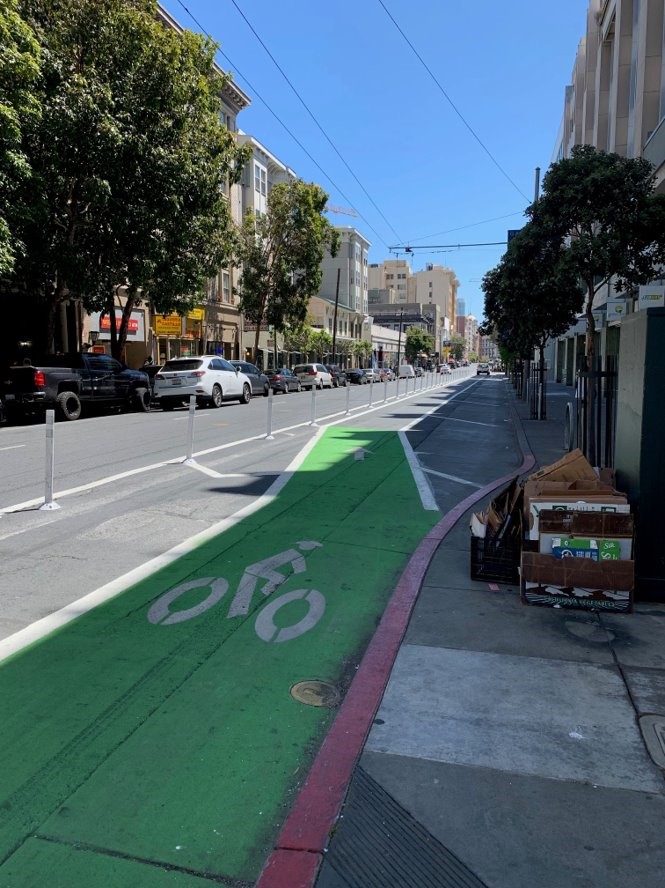
 

Protected bike lane and active flex space along the 300 block of Golden Gate

Protected bike lane and active flex space along the 300 block of Golden Gate

Between 2015-2019, the average rate of a person getting hit by a vehicle while walking or biking along the Tenderloin stretch of Golden Gate Avenue and Leavenworth Street was every nine days. The Tenderloin is a densely populated and diverse community located in the heart of San Francisco. It is home to high concentrations of seniors, children, people of color, people experiencing homelessness and people with limited-English proficiency – many of whom live below the poverty line. These groups are most at risk of dying or being severely injured in traffic collisions.

Because of these concerns, the SFMTA launched two quick-build projects on Golden Gate Avenue and Leavenworth Street with preliminary design phases in February 2020. Considering their similar traffic calming goals, physical proximity and shared audience, we pursued a joint outreach campaign for both projects. SFMTA staff began this outreach through door-to-door canvassing, walkalongs, in-person meetings and emails to engage directly with stakeholders and collect project feedback before starting design.

Facing the Pandemic

Unfortunately, public health restrictions associated with the emerging COVID-19 healthy emergency led to a hold on both projects so that staff could allocate resources to address other critical issues that began to arise. To address immediate social distancing and physical space needs in the Tenderloin, the SFMTA worked with community organizations like St. Anthony’s, GLIDE and Tenderloin Community Benefit District (TLCBD) to implement several street improvements such as block closures, physical distancing lanes and temporary vehicle restrictions.

When the projects resumed in fall 2020, COVID-19 health and safety protocols were still in effect and pushed many meetings, typically held in-person, to online formats. We also partnered with the Tenderloin People’s Congress to hold virtual toolkit forums, community workshops and other conversations.

In place of a traditional, one-time, in-person event, staff created a virtual open house with interactive features and information about the projects. Published in seven different languages, the site remained open over a five-week period, allowing greater flexibility for people to view the information and provide feedback. Staff also hosted virtual office hours to provide space for questions and additional comments. Following the virtual open house, both projects held a public hearing in April 2021 and were cleared to start construction in May.

Impact

Every street in the Tenderloin is on the city’s Vision Zero High Injury Network, the 13% of city streets where 75% of severe and fatal collision occur. The COVID-19 pandemic only exacerbated the challenges of addressing the safety needs of the neighborhood. Now, our recently constructed quick-builds on Golden Gate Avenue and Leavenworth Street are helping to address the unsafe vehicle speeds and failures to yield that have made up the majority of traffic incidents in the Tenderloin.  

The relationships built from the Safer Taylor project provided a foundation to continue conversations with the community about traffic safety improvements in the neighborhood. Staff began outreach through door-to-door canvassing, walkalongs, in-person meetings and emails to engage directly with stakeholders and collect project feedback before starting design.

Throughout construction, SFMTA staff continued to collaborate with local partners such as Code Tenderloin and TLCBD to provide construction notifications to businesses and residents on the corridors. Both Golden Gate and Leavenworth street changes brought innovative quick-build improvements to the Tenderloin, such as an active flex space, and bringing these projects to life under COVID-19 required creativity, flexibility and strong community support.

What’s Next

Partnering with community organizations allows SFMTA staff to engage with stakeholders that would have otherwise been unreachable due to public safety concerns. While quick-build construction is complete, our work in the Tenderloin will continue. Some next steps include evaluating the quick-builds, exploring potential future projects and transitioning some of our COVID-19 emergency streets to quick-build improvements. Community partnerships with local groups and individual residents will continue to sustain and strengthen our work in the Tenderloin.


Published June 18, 2021 at 03:23AM
https://ift.tt/3xv6Lhr

Wednesday, June 16, 2021

Geary Transit Lanes Proving Their Worth

Geary Transit Lanes Proving Their Worth
By Amy Fowler

The verdict is in: transit lanes on Geary Boulevard are keeping riders moving apace, despite citywide trends of increasing traffic.

Muni has remained critical for San Franciscans making essential trips throughout the pandemic. The Temporary Emergency Transit Lanes program quickly installed temporary transit lanes on key routes across San Francisco to help preserve the travel time gains we saw during the early days of the pandemic. Since emergency transit lanes were installed in the Richmond neighborhood last winter, we have been able to lock in 50-75% of those travel time savings for 38 Geary customers where transit lanes were added.

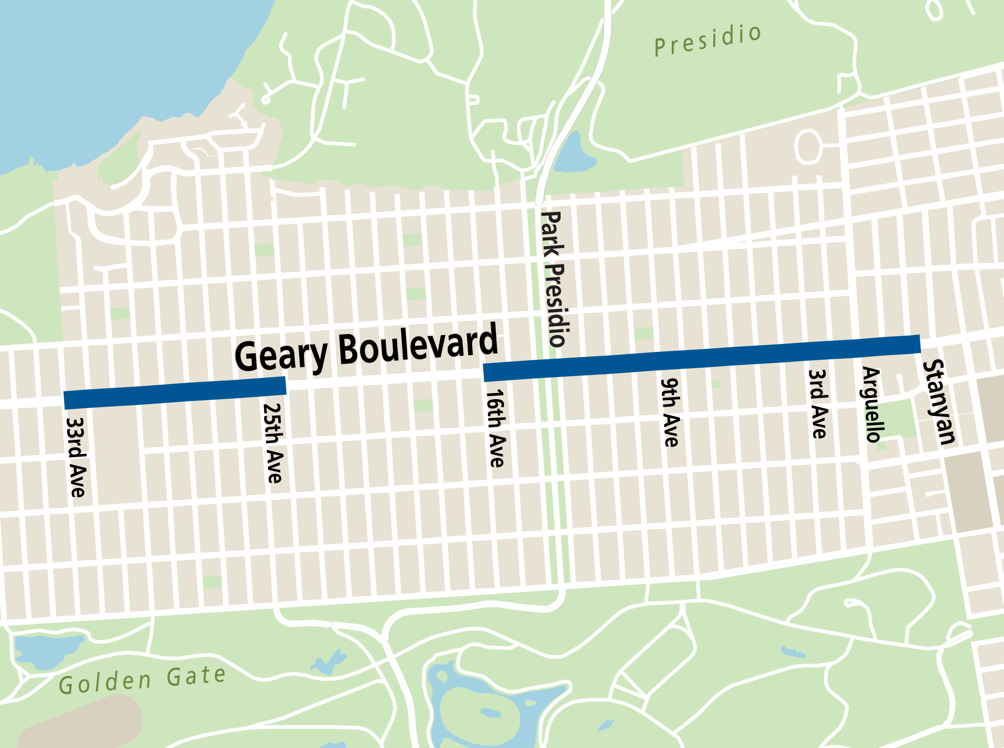
Image of Geary Boulevard showing transit lanes from 27th to 35th ave and from 11th Ave to Stanyan

Emergency transit lanes and other transit improvements were installed along segments of Geary Boulevard between 33rd Avenue and Stanyan Street.

Geary is one of the busiest bus corridors in North America. The new transit lanes are building on the success of the Geary Rapid Project, which is making much-needed transit and safety improvements between Market and Stanyan streets and is now close to wrapping up construction --on time and on budget. Combined with the emergency transit lanes in the Richmond, 75% of the Geary corridor now has transit lanes.

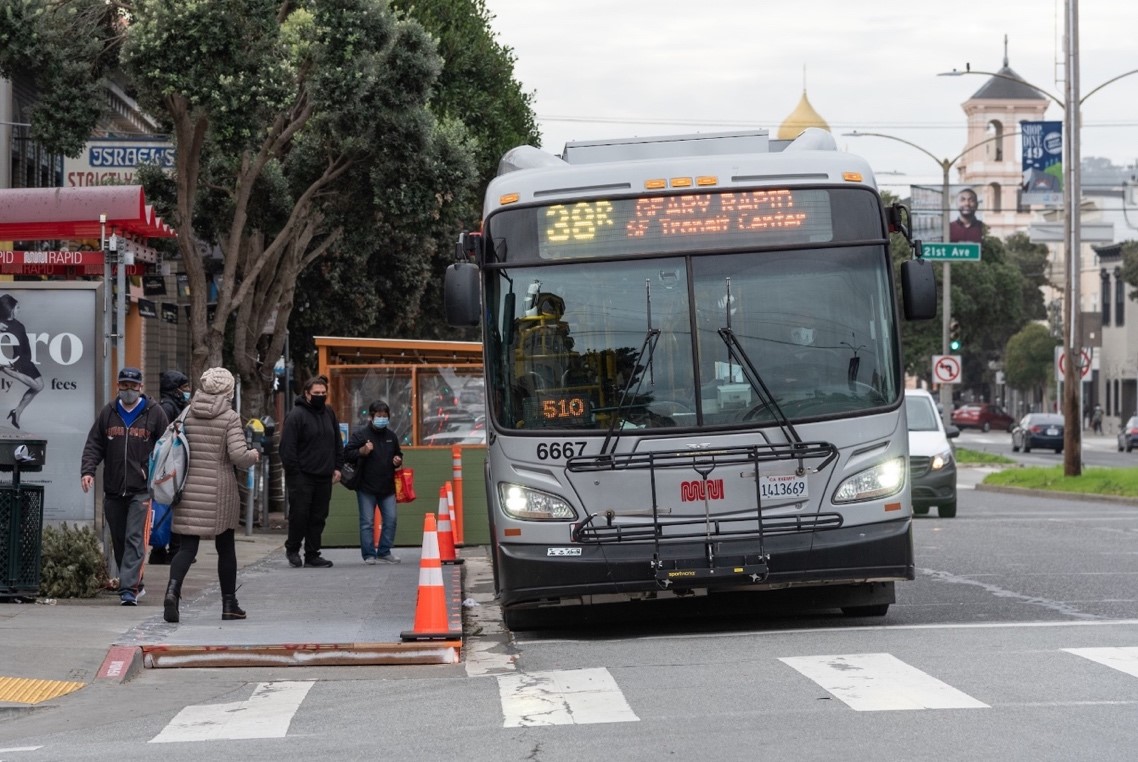
The Geary corridor also features new wooden sidewalk extensions at some of the 38R Geary Rapid’s busiest bus stops. These temporary extensions allow buses to stay in the transit lane when picking up and dropping off passengers, making them more accessible and reliable.

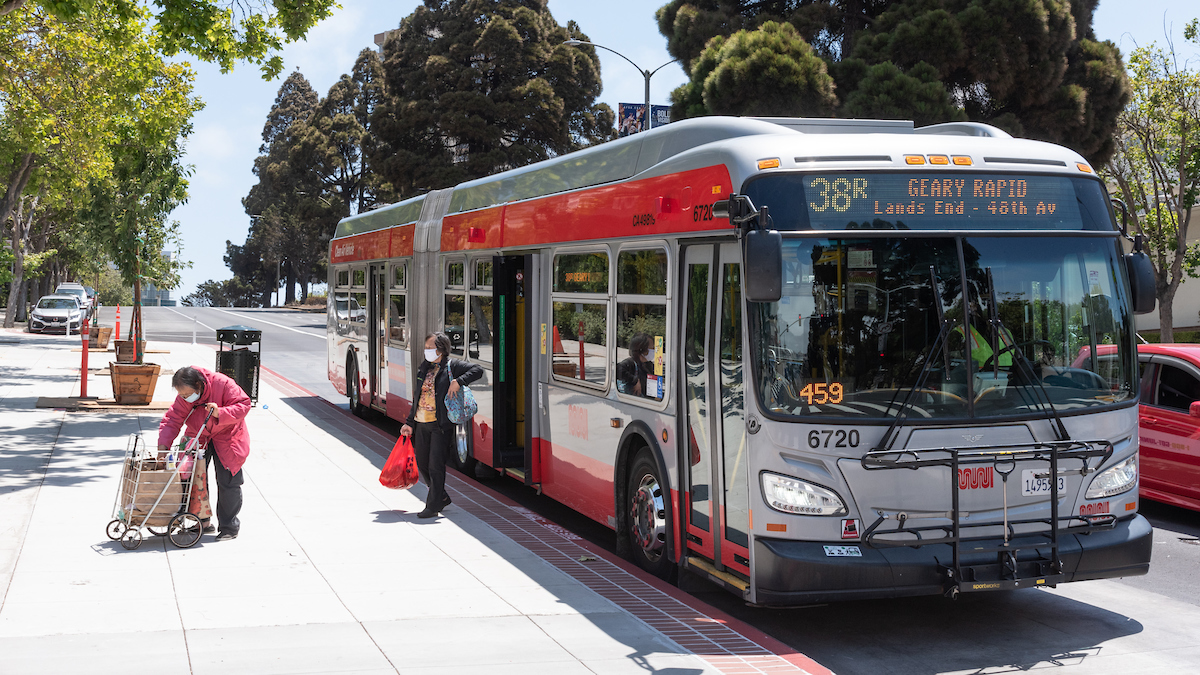
Passengers board a 38R Geary Rapid in the Richmond District with the help of a temporary wooden "bus bulb."

After the temporary emergency transit lanes were installed, they were evaluated using several criteria, including recommendations we heard from the community to ensure that the improvements aren’t creating unintended problems. Metrics we looked at included bus travel times, bus crowding and effects on vehicle traffic.

Some of the key takeaways are:

  • Transit lanes have improved 38 Geary bus performance despite increasing traffic. In spring 2021, after transit lanes were installed, 38/38R Geary travel times were up to 4% quicker than in fall 2020 just before the lanes were installed, and up to 13% quicker compared with pre-COVID levels.
  • Minimal traffic impacts to Geary Boulevard or parallel streets. While we did see reduced traffic speeds on Geary Boulevard between fall 2020 (before the lanes were installed) and spring 2021 (after lanes were installed), those reductions were similar to speed changes we observed on control streets 25th Avenue and Arguello Boulevard. Notably, streets parallel to Geary Boulevard experienced even smaller speed reductions, indicating that diversions to other streets have likely been minimal.
  • A majority of people who took our evaluation survey support making the transit lanes permanent. 52% of the over 700 people surveyed supported maintaining the lanes; 15% were neutral or unsure; while 33% were opposed.

Considering the positive evaluation findings and support for maintaining the transit lanes,  we are proposing to make them permanent. The legislation for doing so will be presented to the SFMTA Board of Directors, likely in July 2021.

Learn more about the evaluation results and next steps on the project webpage.

Project staff will also host a “Virtual Office Hours” session on Wednesday, June 30 between 4 p.m. to 6 p.m. to answer questions about the evaluation results and next steps.

Revised Geary Boulevard Improvement Project design

The Geary Boulevard Improvement Project (Phase 2 of Geary BRT) had previously envisioned transit lanes in the center of the street between Arguello Boulevard and 28th Avenue. In light of the emergency transit lane evaluation results and other factors, the SFMTA is now pursuing a revised side-running design, which could include additional transit lanes, bus stop modifications and safety improvements. Outreach to seek input on these changes is planned for later this year.


Published June 17, 2021 at 01:01AM
https://ift.tt/2S6kuMK

Tuesday, June 15, 2021

SFMTA Community Survey: We Asked and You Answered

SFMTA Community Survey: We Asked and You Answered
By Benjamin Barnett


Report cover: Photo of California Street in Financial District with the title "San Francisco Municipal Transportation Agency: SFMTA Community Survey. SFMTA Board of Directors. June 15, 2021"

Since the beginning of the pandemic, the SFMTA has been looking for ways to strengthen our system and improve our efficiency. We are using this opportunity to come back as a better version of ourselves. A big part of making transportation improvements is to hear from the public about what works and what we can do better. Earlier this spring we completed a community survey of over a thousand San Franciscans asking for your thoughts about public transportation in San Francisco and here is what you had to say:

Muni is Essential for Social Equity

Muni service is essential to making San Francisco a socially equitable and just city. Seven of ten people surveyed describe Muni as an affordable transportation option, and more than two-thirds also support expanding our existing reduced fare programs for youth, seniors, and low-income residents. Seniors, people with disabilities, people of color and low-income San Franciscans have the fewest transportation options and rely on Muni. We are committed to removing any and all barriers to access, including income.

Overall, having more frequent and reliable service was a higher priority (68%) than lowering fares for everyone (28%). At the same time, for those households with incomes under $35,000, lowering fares was the higher priority. We want to ensure that the cost of a Muni fare isn’t a barrier to transportation, and the SFMTA is working to identify funding to expand free and discounted fares without sacrificing Muni service. As San Franciscans recover from the COVID-19 pandemic, Muni service is essential to ensuring everyone in the city can access jobs, health care, schools and groceries, regardless of their income or neighborhood.

Need for More Transportation Funding

Over the last twenty years the demands on San Francisco’s transportation system have increased while revenues haven’t kept up, and the pandemic has only made these problems worse. Recent federal aid helped prevent steep cuts to Muni service but these one-time funds were only a stop-gap measure.

We are encouraged that San Franciscans have heard our message about the agency’s need to rethink funding for the future. Approximately three-quarters of survey respondents see a need for additional funds to improve Muni and back the concept of potential funding proposals to provide it. Seven out of ten people are concerned about a lack of funding leading to service reductions.

Improving on Environmental Goals

Public transit is one of the most important tools we have in the fight against climate change. Eight of ten people describe Muni as good for the environment. By investing in electric buses, improving the reliability and speed of Muni service and making the city a safer place to walk and bike, we are making transit more environmentally sustainable. We already have one of the greenest fleets in the world, but we are committed to transitioning to an all-electric fleet in the years to come.

Muni Service and Facility Upgrades 

One interesting note, a majority of people surveyed rate Muni service as “good.” More frequent Muni riders were even more positive about Muni’s service (75% rated it excellent/good). However, improving the speed, frequency and reliability of buses and trains is a top priority for San Franciscans. Key improvements residents want prioritized include:

  • Providing quick, convenient transit access to all parts of San Francisco
  • Repairing and maintaining Muni equipment and facilities to ensure vehicles’ safety, frequency and reliability
  • Increasing and improving Muni service for the communities most dependent on transit
  • Ensuring Muni service is inclusive and accessible to all
  • Reducing delays to make Muni more reliable

Next Steps

We are continuing to gather feedback from the public and from SFMTA staff to ensure our transportation projects and programs reflect our community’s priorities and values. Your feedback will be the focus of our planning and guide us in making tough choices with limited resources. We will be using survey research to better understand the pandemic’s impact on transportation in the community. In the coming months, we will be fielding our bi-annual travel decision and Muni Rider surveys, as well soliciting more feedback about community transportation priorities. We want to thank you for your input and are working hard to bring you the service that you deserve. For more information, read the detailed report of our survey results.


Published June 16, 2021 at 06:32AM
https://ift.tt/3pZoYB2

Cable Cars are Returning this Summer!

Cable Cars are Returning this Summer!
By

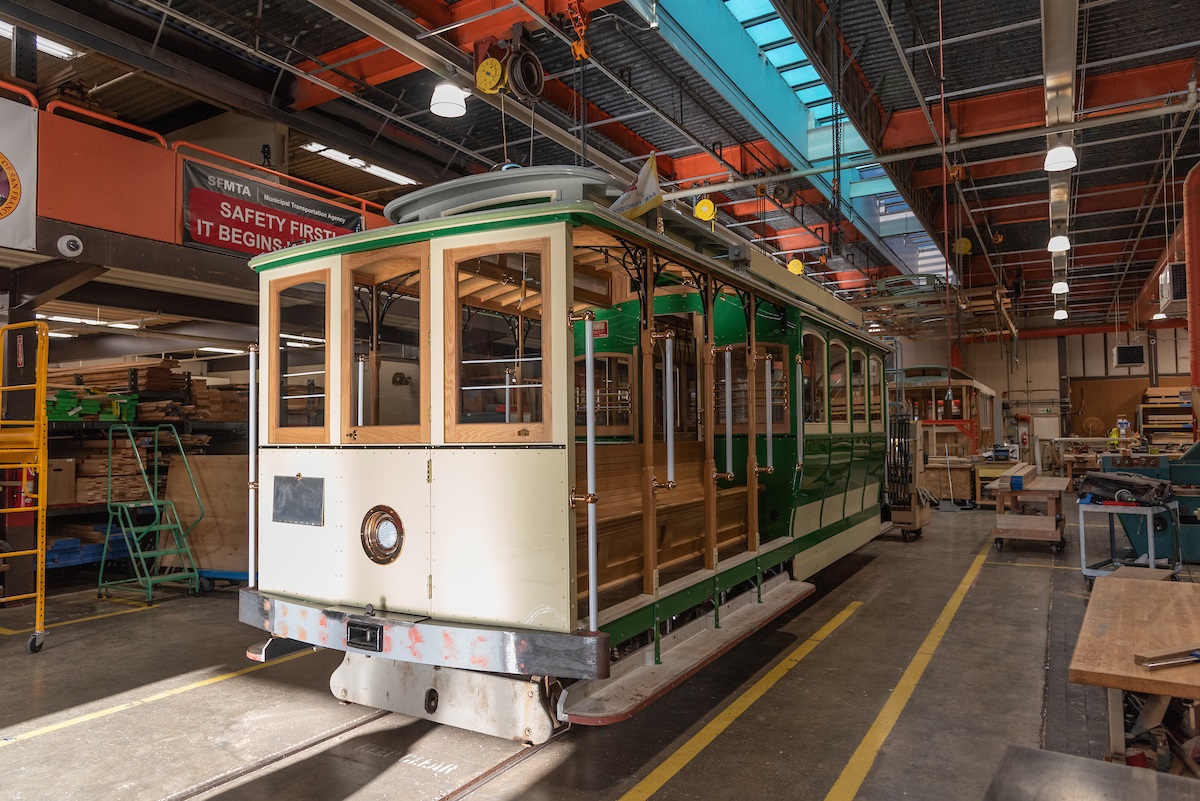
Photo of Cable Car 8

Restored Cable Car 8 being readied for return to service

Nothing says “San Francisco” quite like our historic cable cars--and they’ll soon be gracing our streets once more. As the city intensifies its focus to supporting economic recovery, residents, regional visitors and tourists will see the return of the iconic cable cars and hear their chiming bells from Union Square to Fisherman’s Wharf. Today, the SFMTA, along with Mayor London N. Breed, announced that cable cars will be gliding down the city’s picturesque hilltops this summer as downtown economic activity returns.

SFMTA staff will conduct mechanical inspections of the historic vehicles and operator retraining in mid-July. By the first week of August, we will test the system by inviting passengers aboard for the duration of a “mock service" trial, riding the lines where cable cars are operating and making stops. This mock service will be irregular, not following a particular schedule, as we work out any kinks in the system that might arise.

By early September, cable car service will return - first to the Powell-Hyde line from about 7:30 a.m. until about 10 p.m. (though cars returning to the cable car barn after 10 p.m. will continue to take ride to Chinatown). Service on the Powell-Mason and California routes will then follow.

Last March, in response to the COVID-19 pandemic, the SFMTA temporarily halted cable car service as part of the city’s emergency response. This decision was made to best protect operators and the public. Muni resources were then shifted to a core network --a  limited number of the most in-demand routes--to serve essential workers and accommodate physical distancing on San Francisco’s most utilized lines. The result was the longest cable car shutdown since the full system reconstruction in the 1980s. Now, to reboot the system requires significant work. Leading up to the return of San Francisco's cable cars, the SFMTA will recertify operators, hire line inspectors and prepare our infrastructure to accommodate service.

Stay tuned for more details in the coming months!

Anyone interested in cable car service updates is encouraged to subscribe to text or e-mail updates for more information.


Published June 16, 2021 at 02:36AM
https://ift.tt/3pWoRGB

Monday, June 14, 2021

Celebrity Voice Announcements Welcome Back Muni Riders

Celebrity Voice Announcements Welcome Back Muni Riders
By Stephen Chun

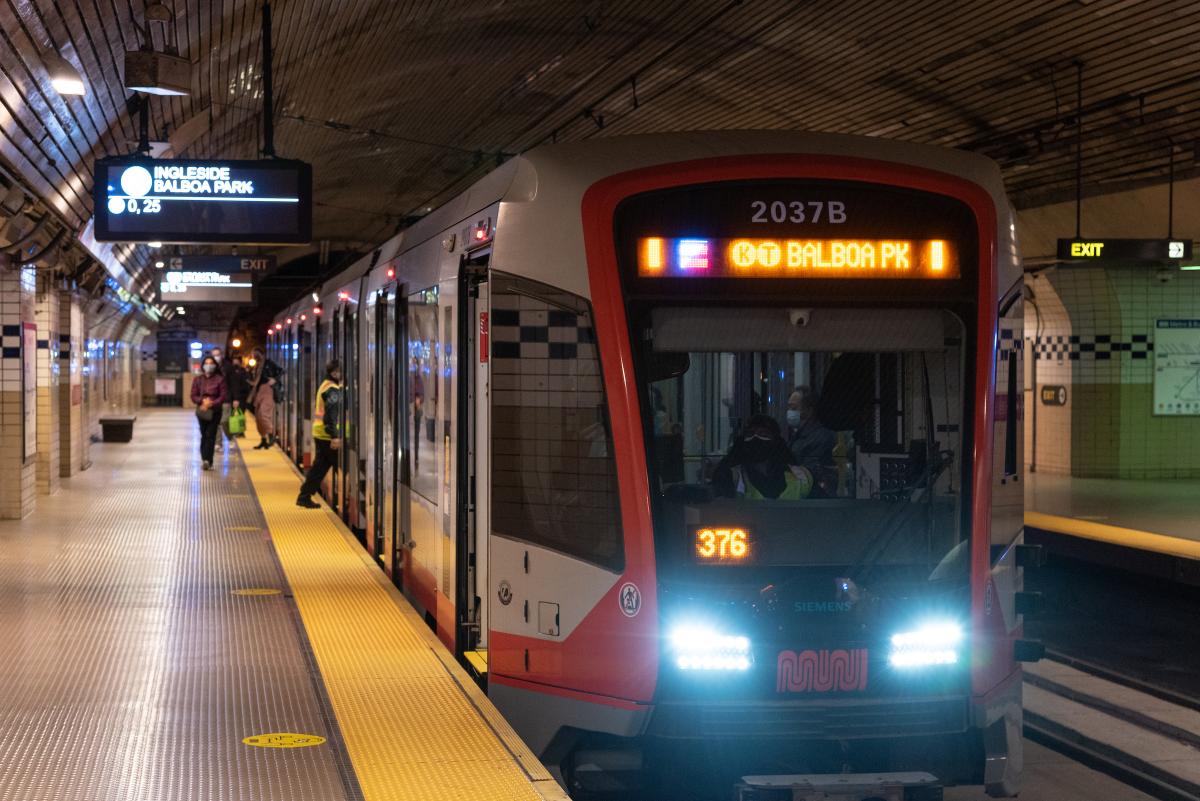
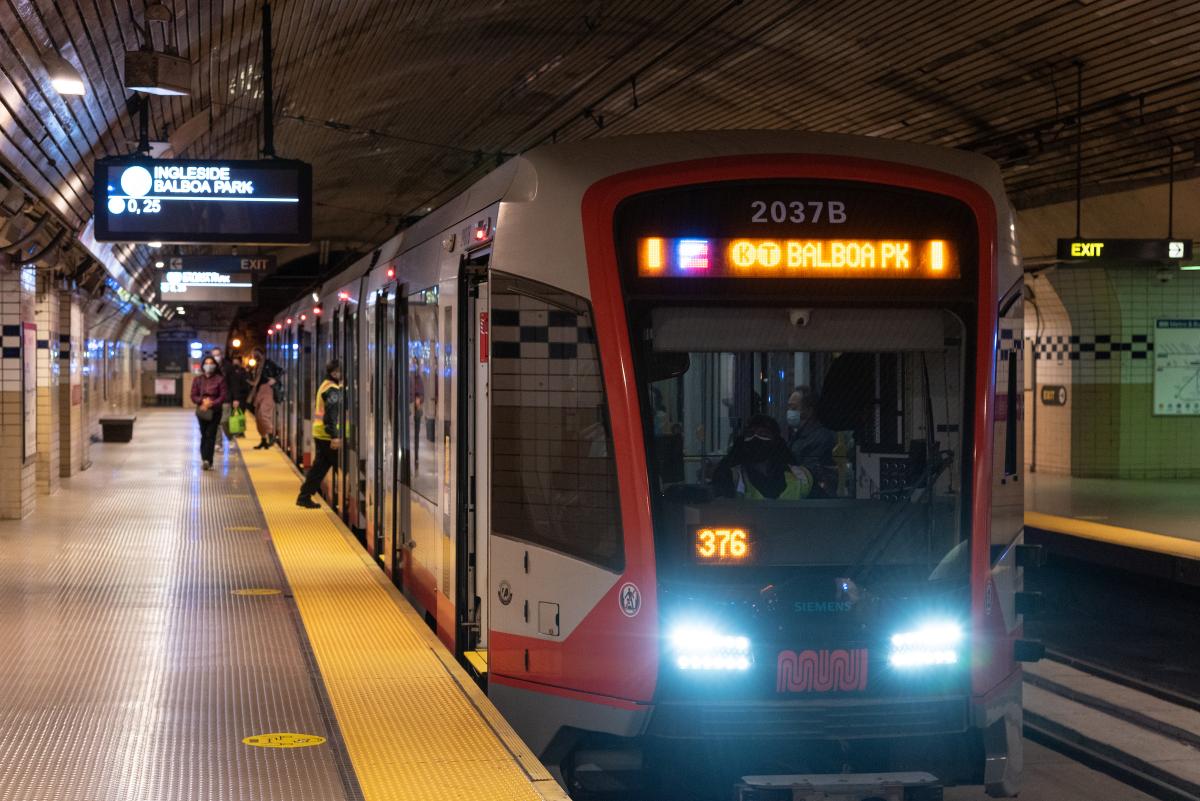
Photo of the KT train arriving at Forest Hill station

 In case the folks announcing “Welcome back Muni riders!” and “Thanks for riding Muni!” when you ride our buses or trains sound familiar, you’re not mistaken. Those are INDEED celebrity voices!

Since the SFMTA’s Muni Service Restoration on May 15th, riders have been entertained with welcome back greetings and thank you announcements from local legends in our Metro subway stations and on various rail and bus routes all around the city.   

Celebrities providing voiceovers as a fun way to welcome back riders include San Francisco Mayor London Breed, celebrity chef Martin Yan, Forty Niners legend and wide receiver Jerry Rice, award winning actor and SF native BD Wong , voice of the San Francisco Giants Renel Brooks-Moon, play-by-play announcer of the San Francisco Giants Dave Flemming, and San Francisco’s queer and trans non-profit community service and performance order, The Sisters of Perpetual Indulgence. With many more to come!

By the way, did we miss anyone? Which local San Franciscan or celebrity would you like to hear?

To our riders: we thank and appreciate you for choosing Muni after such a tough year. We hope this campaign brings some joy to your trip. The SFMTA is dedicated to helping you reach your destination anywhere in San Francisco as the city reopens.

Looking ahead to August, pending pandemic protocols, more than a dozen bus routes that were temporarily suspended due to pandemic-related service reductions will be restored. With this effort we plan to bring 98% of San Francisco within two to three blocks of a Muni stop.

The SFMTA would like to thank our celebrities for lending their voices as we connect San Francisco through a safe, equitable, and sustainable transportation system. We look forward to seeing you onboard! As Mayor London Breed says, “We're so happy to have you back on Muni!”


Published June 14, 2021 at 10:01PM
https://ift.tt/3cJ5nzI

Thursday, June 10, 2021

Bayview Community and SFMTA Receive National Planning Award

Bayview Community and SFMTA Receive National Planning Award
By Stephen Chun

The SFMTA’s efforts to improve transportation in Bayview-Hunters Point, one of San Francisco's traditionally African-American neighborhoods, have been recognized today by the American Planning Association (APA).  The SFMTA Bayview Community Based Transportation Project (Bayview CBTP) received the APA’s 2021 Advancing Diversity & Social Change in Honor of Paul Davidoff National Planning Excellence Award. Coverage of the virtual ceremony, held June 10, 2021 can be found here. 

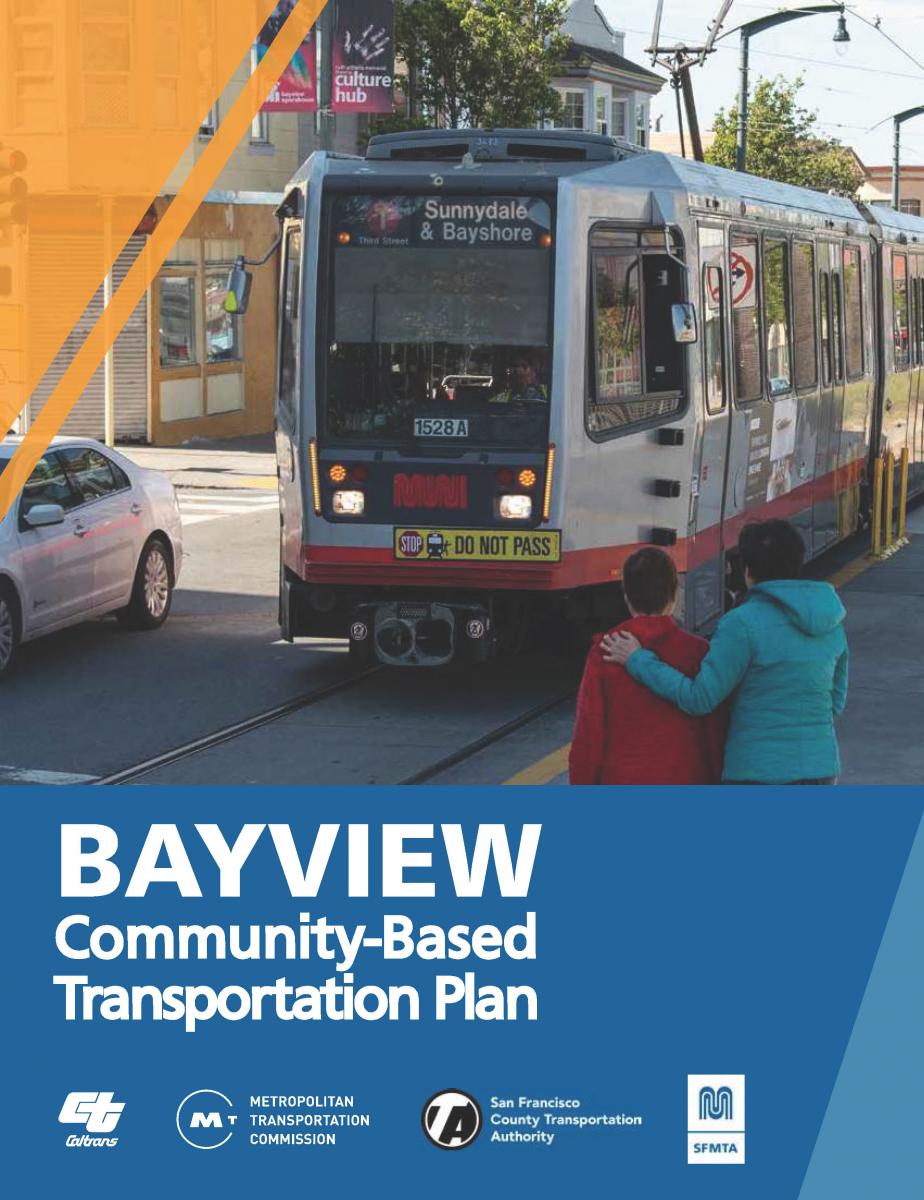
Cover image of report showing photo of T Third train with report title Bayview Community-Based Transportation Plan

The Bayview CBTP gives voice to the needs of that culturally rich and resilient community which has faced a legacy of institutional and environmental racism. During a two-year open-ended planning process, the SFMTA partnered with five community-based organizations to develop a responsive and actionable plan that directly responds to the transportation needs, challenges, and values of Bayview’s residents. 

Some of highlights from the plan:

  • Community-driven Partnerships The SFMTA partnered with local organizations BMAGIC, Hunters Point Family, CYC, El Centro Bayview, and BAYCAT to prioritize including those hardest to reach and most vulnerable to transportation challenges.
  • Showing Respect and Building Trust Through a series of 22 interviews with community leaders & elders, the SFMTA created a Statement of Intent. This serves as a promise to the public of accountability, trust & transparency, preserving community voice, and delivering effective projects in a community historically subject to long planning timelines and limited improvements.
  • Direct Public Outreach The project team focused on meeting residents where they were, spending 295 hours speaking face-to-face with over 4,000 residents throughout a 14-month public outreach period.
  • Equity Index - A tool for mapping vulnerability to transportation challenges, with definitions and calibration supplied by Bayview residents. This ensured the plan benefits those whom the community believes to be most in need.
  • Youth Transportation Summit The Girls2000 program worked with SFMTA staff to organize the summit for Bayview youth of color, attended by Supervisor Walton.
  • “Next Stop” - A must-watch short-four-minute-film produced, shot and edited by young women of color in the Bayview. Discussing transportation, safety and advocacy, the film ends with the call to action: Sound Off! Be Heard!
  • The SFMTA’s First Participatory Budgeting (PB) Exercise - Led by a Community Steering Committee of 12 residents & community leaders, Bayview residents directly voted on how to spend $760,000 to improve transit and transit access in their community.
  • A Commitment of $3.61 Million A transparently-developed set of priority projects based on the needs and lived experience of Bayview residents – with prioritization for funding based solely on resident input.

In the 16 months since the Bayview CBTP was adopted, the SFMTA has already delivered on many of our promises to the Bayview community, including:

  • Projects on the Ground - More than half of the Priority Projects identified in the Bayview CBTP are already implemented. This includes three Quick-Build projects on Williams Avenue, Evans Avenue, and Hunters Point Blvd. For this last Quick-Build, the SFMTA partnered with local organizations and artists to paint murals on 2,100’ of concrete k-rail barriers celebrating Black visibility and the wildlife along the bay shoreline.
  • The Return of the 15 Bus Discontinued in 2007, Muni received an enormous amount of community feedback requesting the return of the 15 Third. In response,  we restored service in April 2021 under the new name 15 Bayview Hunters Point Express.
  • Onboard Safety Presence The top vote-getter in the Participatory Budgeting public ballot was to fund three new Transit Assistants from our MTAP program to ride lines in the Bayview, diffusing and deterring any conflicts and assisting bus operators as needed.. These Transit Assistants began service in November of 2020.

The SFMTA would like to thank District 10 Supervisors Malia Cohen and Shamann Walton, as well as our funding partners: Caltrans, who supplied the Sustainable Transportation Planning Grant that funded the Bayview CBTP; the San Francisco County Transportation Authority, which contributed about $3 million in half-cent transportation sales tax funds for the local match grant requirement and capital investments identified in the CBTP; and the Metropolitan Transportation Commission, which funded projects through Participatory Budgeting with a $600,000 grant from their Lifeline Transportation Program.

Over 50 years ago, APA’s National Planning Awards program was established to recognize outstanding planning efforts that help lead communities forward to a stronger, more equitable, and sustainable future. Since 2014, five San Francisco organizations and/or projects have been awarded, with this year marking the first time that the SFTMA has!


Published June 11, 2021 at 01:57AM
https://ift.tt/2TjCqnc

Tuesday, June 8, 2021

Improving Pedestrian Safety and Access for Lake Merced

Improving Pedestrian Safety and Access for Lake Merced
By Adrienne Heim

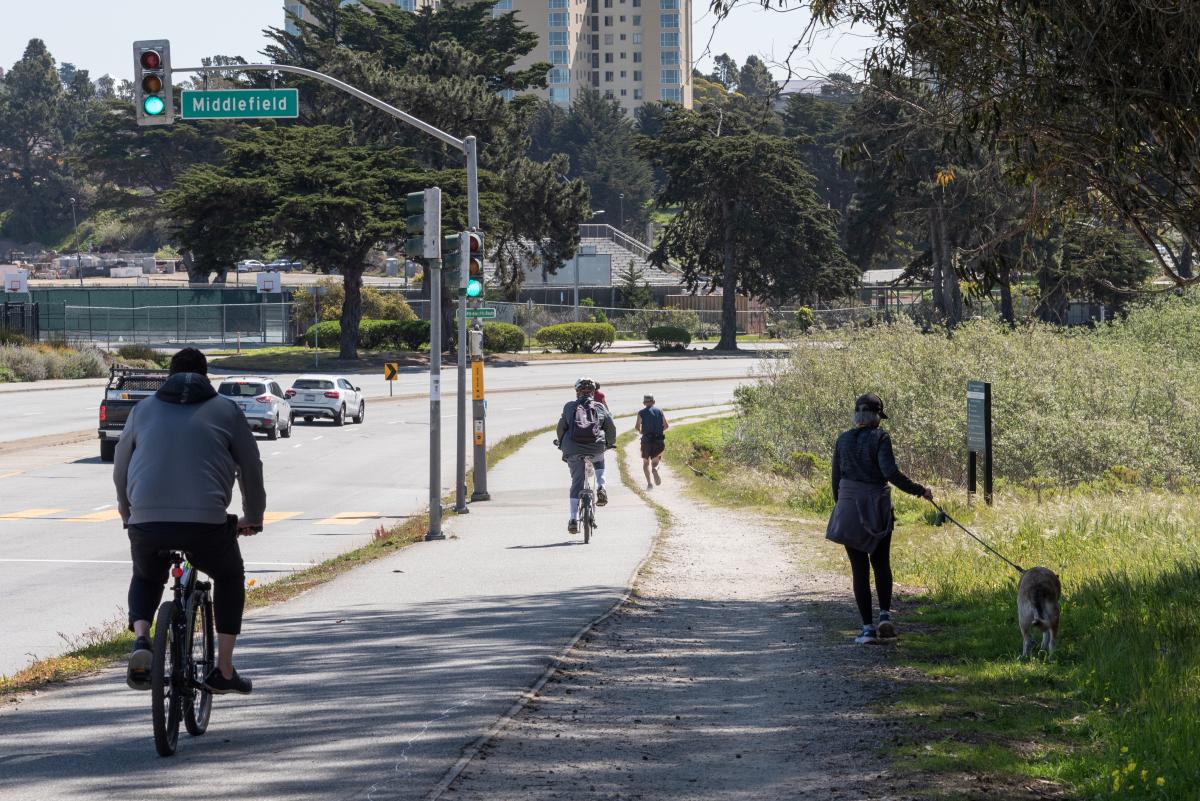
Photo of Lake Merced Boulevard with pedestrians, bicycle riders and cars

Lake Merced is a popular recreational destination

Help Us Prioritize and Identify Needed Safety Improvements

The Lake Merced Pedestrian Safety Project is studying potential improvements for pedestrian safety and access along Lake Merced Boulevard between Sunset Boulevard and John Muir Drive. Situated in San Francisco’s southwestern corner, Lake Merced Boulevard has a history of collisions, including those between vehicles and pedestrians, and between vehicles and bicycles. Lake Merced Boulevard between Font and Sunset boulevards is part of San Francisco's Vision Zero High Injury Network (HIN), where 75% of the city's traffic injuries and fatalities occur on just 13% of its streets.

Surrounded by major recreational, education, and shopping destinations, the boulevard is a major route for Lake Merced Park, San Francisco State University, Lowell High School, Lakeshore Elementary School and Stonestown Galleria. Lake Merced Boulevard is also an official city bicycle route where cyclists can either use the bike path around the lake or share the roadway with drivers on the north side of the street.

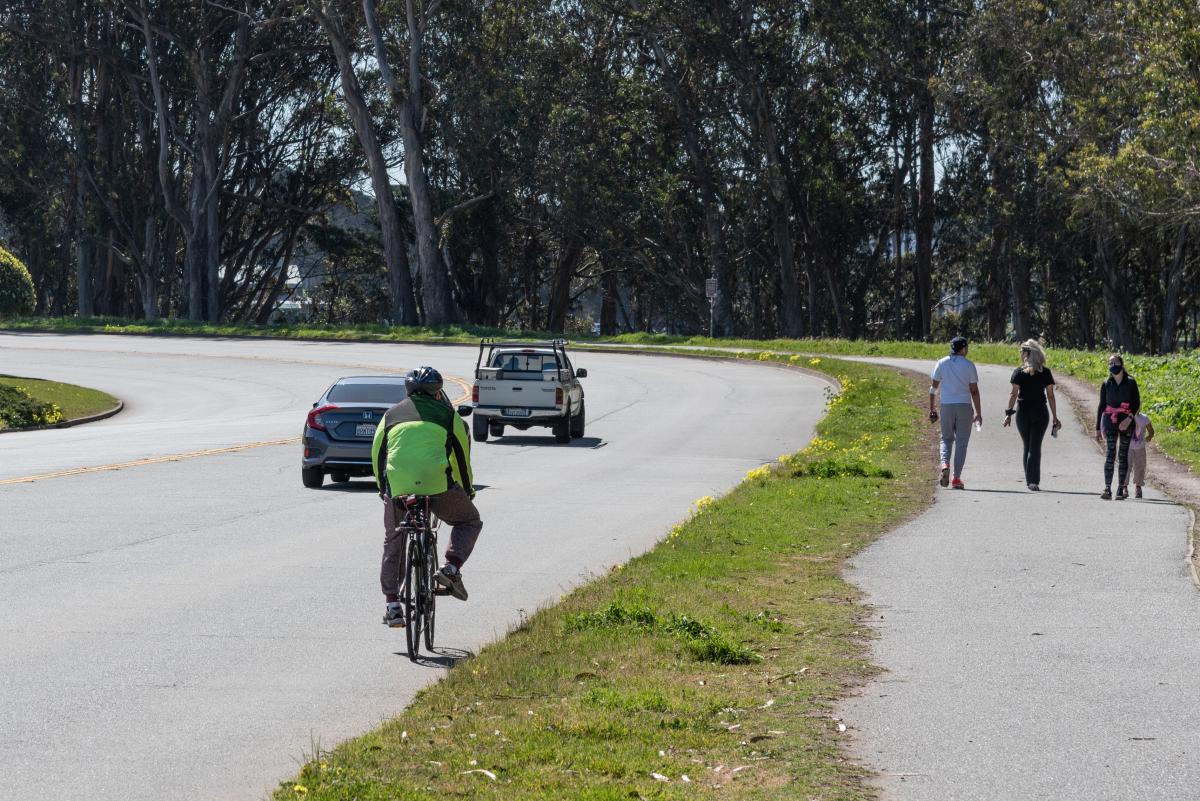
Photo of people walking and biking, with cars passing by on Lake Merced Boulevard

People walking and biking on Lake Merced Boulevard

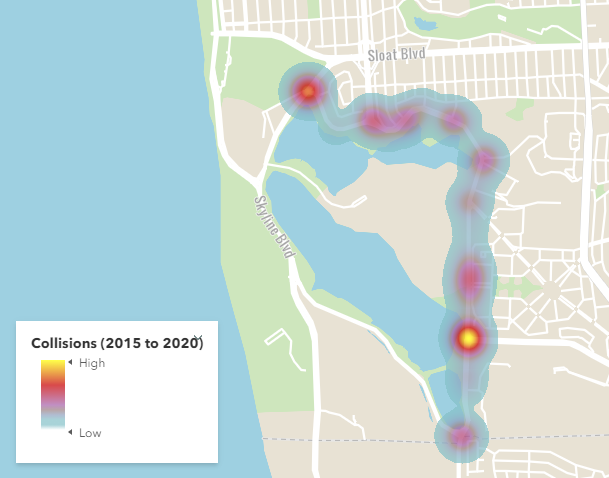
Over a 5-year period (between 2015 to 2020) a total of 106 collisions were reported on the boulevard between Skyline Boulevard and John Muir Drive. Of those, nine were bicycle-vehicle collisions and four were vehicle-pedestrian collisions.

Map of Vehicle, Bicycle and Pedestrian Collisions from 2015 to 2020 on Lake Merced Boulevard from Skyline Boulevard to John Muir Drive

Vehicle, Bicycle and Pedestrian Collisions from 2015 to 2020 on Lake Merced Boulevard from Skyline Boulevard to John Muir Drive

Participate in Our Virtual Open House

From June 8 to June 22, we are inviting feedback from community members who live, work, and/or travel around Lake Merced Boulevard through our interactive virtual open house (available in English, Chinese and Spanish).  You can learn more about the project and provide comments during the event, which can be accessed at any time during the open house period.

In July, we will review the steering committee and community’s feedback and produce a Community-Based Transportation Plan (CBTP) that highlights recommendations for improvements, preliminary conceptual designs, and a feasible implementation plan that reflects community needs and desires.

We also encourage you to take the Lake Merced Pedestrian Safety Survey on the website or by placing your cell phone camera over the QR code.

QR code for open house survey

The survey will be open until June 22. 

The planning process for this project includes a monthly steering committee that consists of neighbors and stakeholders to help staff better understand current walking patterns, barriers, and opportunities to improve pedestrian connections to and from Lake Merced Park and nearby transit stops. Learn more about the project and subscribe to project updates by visiting our Lake Merced Pedestrian Safety Project, Making Access Around Lake Merced Safer and More Pleasant website.


Published June 08, 2021 at 09:47PM
https://ift.tt/3g1nymk

Monday, June 7, 2021

Calling Local Artists for Muni Art 2022

Calling Local Artists for Muni Art 2022
By Pamela Johnson

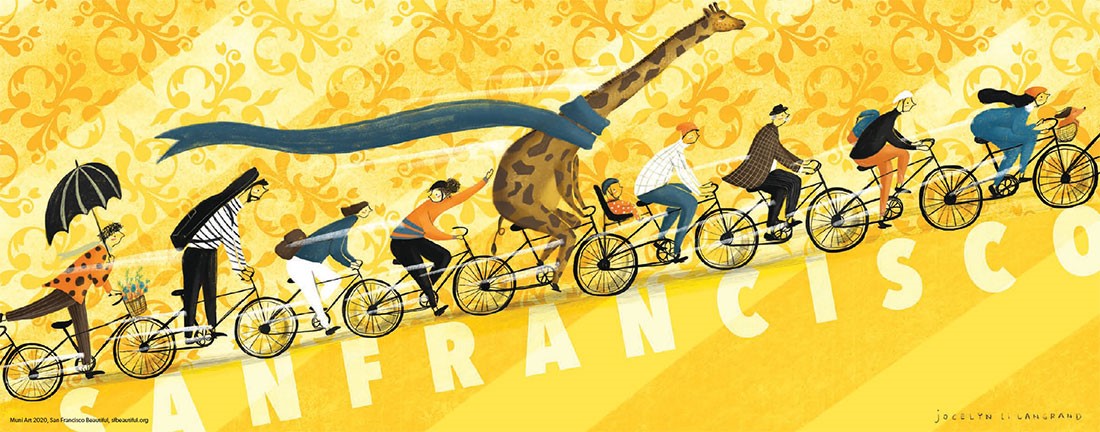
Image of Muni Art showing people and animials on bicyles, by Muni Art 2020 winnerJocelyn Li Langrand

Muni Art 2020 by Jocelyn Li Langrand

The Muni-Art contest will be returning in 2022 to once again to bring the work of locally-based poets and artists to Muni customers throughout San Francisco. We invite local artists to participate in the competition by submitting proposals with this year's theme, the "Streets of San Francisco." Applications are now available online. The winning artists will create eight new visual works of art that will interpret five preselected poems by Bay Area poets.

The Muni Art project will be installed on a total of one hundred buses that will become moving art galleries displaying the theme, "Streets of San Francisco" from January 1, 2022, to April 30, 2022. This is double the number of buses featuring local artists since the contest first began.

"San Francisco Beautiful is proud to partner once again with SFMTA to bring the work of five local artists to Muni riders throughout San Francisco," noted Executive Director Darcy Brown. "After a time of uncertainty, Muni Art is one bright spot that all San Franciscans can count on every year. This year we chose a familiar and comforting theme, "Streets of San Francisco" and are honoring our own world-renowned local poet, Lawrence Ferlinghetti."

The deadline to submit proposals for the contest is July 16, 2021, at 6 p.m. A committee comprised of local gallery owners and art institutions will review applications and select ten finalists.  These artists will then submit their initial designs, which will be presented to the public for an online vote to choose five winners. Finally, on August 30, 2021, the winners will be announced. In addition to having their art displayed on 20 Muni buses, they will each be awarded $1,250.

Now in its seventh year, the contest is made possible through a collaboration between the SFMTA, San Francisco Beautiful, and The Poetry Society of America. For artist entry guidelines and sponsorship opportunities, please visit San Francisco Beautiful.


To see last year’s Muni artist and poet winners’ creative work, please visit the 2021 Muni Artists gallery.


Published June 08, 2021 at 03:41AM
https://ift.tt/3iolvKF

Thursday, June 3, 2021

Moving San Francisco With Pride 2021

Moving San Francisco With Pride 2021
By Pamela Johnson

Since the city’s first Pride Parade in 1970, the LGBTQ+ community and their allies have been moving San Francisco forward to become a more just, diverse and inclusive place to live, work and enjoy. The half-century long Pride event has served as a celebration and counterpoint to the discrimination and challenges the community has historically faced. And we can all be proud that San Francisco has been a pioneer on such issues as same-sex marriage, health care and anti-hate legislation.

Historically, San Francisco's Pride Parade is the largest in the country with over a million people in attendance, usually including travelers from cities across the country and around the globe celebrating and paying homage to the members of the LGBTQ+ community. Due to the COVID-19 pandemic, however, Pride will look different this year with a focus on Bay Area participants.  

Recognizing the strides and achievements made by the LGBTQ+ community over more than five decades, the SFMTA’s theme for 2021 is "Moving San Francisco with Pride.” As home to one of the world's largest and most prominent LGBTQ+  communities, we look forward to celebrating Pride all month long.

What You Should Know About SF Pride 2021

The famous parade and festival have been canceled and replaced this year by a variety of activities. Visit SF Pride to see the complete list.

June 11 and 12

  • SF Pride will present the first-ever SF Pride Movie Nights at Oracle  Park.
    • Friday, June 11 at 6:30 P.M.  – In the Heights
    • Saturday, June 12 at 6:30 P.M.  – Everybody’s Talking About Jamie

June 18

  • Pride presents a Black Liberation event with African American Art and Culture Complex (AAACC)

SFMTA staff are, of course, an important part of the LGBTQ+ community that keeps SF moving with Pride. Pride is an opportunity for us to demonstrate our continued support of the LGBTQ+ community, promoting our core values of respect, inclusivity and integrity.

Get Your free SFMTA Pride Assets

To help you celebrate the LGBTQ+ community and observe Pride along with us, we have created Pride-themed digital and social media collateral for you to use.

This Pride, visit the SFMTA on social Media: Instagram, Facebook, and Twitter and see how San Francisco celebrates!


Published June 04, 2021 at 01:38AM
https://ift.tt/2SSmEzu

Wednesday, June 2, 2021

Muni’s COVID-19 Distancing Requirement to End on June 15

Muni’s COVID-19 Distancing Requirement to End on June 15
By Kristen Holland

Photo of passengers entering K/T train at Forest Hill Station

San Francisco’s Health Officer has confirmed that the SFMTA may eliminate the requirement that customers maintain 3-feet of physical distance from others on Muni beginning June 15 to coincide with the broader statewide reopening campaign. The requirement to wear masks still applies while waiting for, paying for, and riding on Muni, and customers must maintain a six-foot distance from operators.

Thanks to the Department of Public Health’s (DPH) leadership, our community has extremely high citywide vaccination rates and the lowest case rates since the beginning of the pandemic. This means that more riders will be permitted onboard each vehicle, which will reduce pass ups and allow us to restore additional service later this summer.

For the past year, physical distancing regulations and other pandemic constraints required us to consolidate Muni service to a reduced number of routes, ensuring sufficient capacity for essential trip-takers. With these regulations relaxing, more Muni coverage is on the way, but your trip might look a bit different, with some new lines and temporary reroutes. These changes allow us to continue to safely provide more transit to more people.

Eliminating distancing requirements will allow us to implement additional Muni service coverage planned for August, which is contingent on increasing passenger capacity per vehicle. Muni will no longer need as many buses on certain routes to compensate for the reduced capacity. With each vehicle able to carry more riders, extra vehicles can be reallocated to other routes and areas not previously served.

Critically, we want to remind all customers that regardless of vaccination status, masks and staying six feet away from operators will still be required on-board to comply with FTA and OSHA mandates.

Public health and safety remain our top priorities as Muni service expands. We are working with our transit operators to detail health and safety protocols and with DPH to implement science-based practices that protect staff and the public during the pandemic.  


Published June 02, 2021 at 08:52PM
https://ift.tt/2TsOvGI

June 10 Muni Service Changes Adds Service on Connector Routes

June 10 Muni Service Changes Adds Service on Connector Routes By Clive Tsuma The 38R Geary Rapid will run every 6 minutes starting June 1...